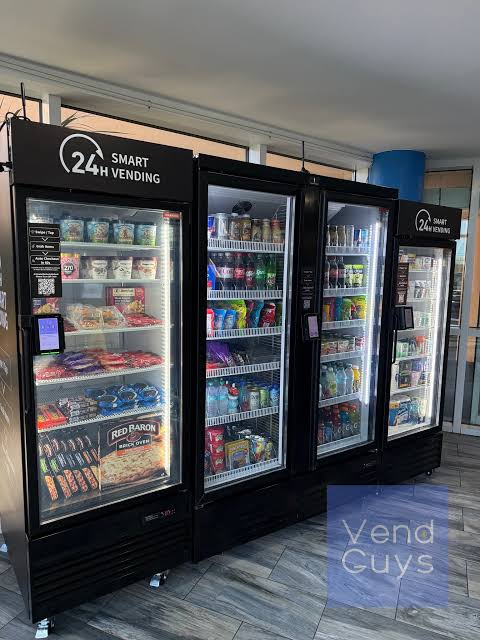

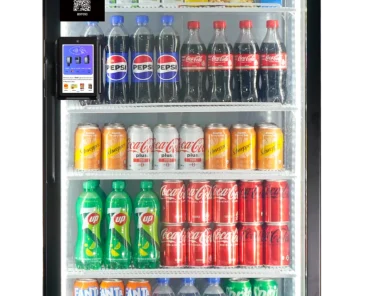
Learn how smart cooler vending machines are the new technology-driven refreshment solution for offices, warehouses, gyms, apartments, schools, medical facilities, and high-traffic workplaces in Alliance

Smart Cooler Placement Mistakes That Hurt Fresh Food Sales in DFW Workplaces
The Smart Cooler Was Stocked, But Nobody Used It
The Scenario
A smart cooler can look perfect on installation day. The glass door is clean, the fresh food is lined up neatly, the drinks are cold, and the checkout process feels modern. The office manager walks by and thinks, “Great, this should fix our lunch problem.”
Then a few weeks pass.
The salads barely move. The wraps sell sometimes, but not enough. The protein drinks disappear, but only from one side of the cooler. Employees still leave the building for lunch. Management starts wondering if fresh food service was a bad idea.
Most of the time, the cooler is not the problem. The placement is. I have seen smart coolers underperform simply because they were placed in the “nice” spot instead of the useful spot.
A beautiful corner near the lobby may look good for a tour, but if employees do not naturally pass it during their break, the cooler becomes decoration. Fresh food does not sell because someone took a photo of it. It sells because the cooler is in the path of real people during real break times.
DFW workplaces can be tricky. A Dallas office may have multiple floors. A Fort Worth warehouse may have a front office, dock area, and employee breakroom separated by long walking paths. A Plano corporate building may have badge-controlled sections. An Alliance logistics site may have drivers, contractors, and employees using different entrances.
Smart cooler placement should be decided after watching how the building works, not after looking at an empty wall.
Mistake One: Placing the Cooler Where Management Sees It, Not Where Employees Use It
This happens a lot in offices.
The smart cooler gets placed near reception, a polished common area, or a front hallway because that space looks professional. Visitors can see it. Executives pass by it. It feels like the right place because it makes the workplace look upgraded.
But employees may take breaks somewhere else.
A cooler near reception may miss the people who would actually buy fresh food every day. The customer service team may sit on the other side of the floor. The warehouse staff may not enter the office area at all. The night crew may not have access after the front doors lock.
Placement is not about visibility to management. It is about access for the people buying.
A smart cooler works best near the break room, time clock, shared kitchen, employee entrance, training room, or the walking path people already use during breaks.
It should be close enough that employees do not have to “make a trip” just to buy a wrap or salad.
Fresh food sales are especially sensitive to distance. Someone might walk farther for coffee once in the morning. They will not walk across a warehouse for a turkey wrap if they only have ten minutes.
A DFW office with 90 employees may think one cooler in the front lounge is enough. After two weeks, the sales look weak. Then the provider moves it near the main kitchen where employees already refill water, heat lunches, and take breaks. Suddenly the same products start moving.
Same cooler. Same food. Better location.
That is why Texas Vending reviews traffic flow before recommending smart cooler placement. A North Texas company that installs vending machine for free still has to put the equipment where it can actually perform. Free placement does not help anyone if the cooler sits in the wrong corner.
Mistake Two: Ignoring Shifts, Badge Access, and Building Layout
Warehouses and large DFW campuses create a different placement problem.
The cooler may be technically available, but not practically available.
A Fort Worth distribution center might have employees working across two or three shifts. The first shift uses the main break room. The second shift eats closer to the dock area. The overnight crew enters through a side door and rarely walks near the front office.
If the smart cooler is placed in a secure office hallway, the warehouse crew may never use it. If it is placed behind a badge-controlled door, drivers and contractors may not have access. If it is in Building A, employees in Building C may not bother.
That does not mean the smart cooler failed. It means the site review missed the real movement inside the property.
Large offices and multi-building campuses need a placement plan. One cooler may not serve the whole property. A better refreshment solution may include a smart cooler in the main employee break room, a drinks machine near the warehouse floor, office coffee & tea service in the administrative area, and a micro market in the highest-traffic building.
A smart cooler can also work as part of an operated cutting-edge technology micro-market service. In that setup, the cooler supports fresh food while the market shelves handle snacks, drinks, and self-checkout. That can work well for offices, manufacturing sites, hospitals, warehouses, and apartment amenity areas, but only when placement follows the traffic.
The hard truth is simple: employees do not change their break pattern for a cooler. The cooler has to fit the break pattern.
Mistake Three: Forgetting Restocking, Repairs, Moving, and the Real Service Path
Smart cooler placement is not only about customers. It also affects service.
A cooler can be in a high-traffic spot and still be a bad location if the route driver cannot service it properly. If the driver has to park far away, wait for an escort, pass through multiple locked doors, and carry fresh food across the building, service becomes slower and less flexible.
That matters because fresh food needs attention. Salads, wraps, sandwiches, yogurt, protein drinks, fruit cups, and refrigerated meals require clean handling, rotation, temperature awareness, and regular restocking. If the cooler is hard to reach, emergency service becomes harder too.
A smart cooler should have a practical service path. The route team needs access for restocking, cleaning, repairs, and product rotation. If the equipment needs to be moved later because the office remodels or the warehouse changes departments, the provider should be able to handle that too.
This is why repair and moving services matter. Texas workplaces change. A company may expand into another suite. A warehouse may move the employee break area closer to a new production line. An apartment community may renovate its clubhouse.
If the vending provider can install but cannot repair or relocate equipment, the customer is left dealing with avoidable headaches.
Texas Vending supports workplace vending service, smart cooler placement, micro markets, office coffee & tea service, repair, and moving support for qualified DFW and North Texas locations. That matters after installation, not just before it.
There is also the issue of temperature and environment. A cooler should not be placed in direct afternoon sunlight, beside a constantly opened dock door, or in a tight corner with poor airflow. DFW heat already makes refrigeration work harder. Bad placement adds stress to the equipment and can hurt food quality.
Healthy vending machines fresh food only works when the food stays cold, the products move quickly, and employees trust what they see inside the cooler. Trust disappears fast if the cooler looks neglected, the same food sits too long, or popular items are always gone.
A smart cooler is not a magic box. It is a fresh food service point. It needs the right location, the right product mix, and a provider that keeps adjusting after installation.
How Texas Vending Looks at Smart Cooler Placement
A strong smart cooler program starts with honest questions.
Who will use it every day? Where do employees actually take breaks? Are there different shifts? Is the cooler behind a locked door after 5 p.m.? Can drivers or contractors access it? Is there enough power? Can the route team restock without disrupting the workplace? Is the location climate-controlled? Does the product mix match the people on-site?
Those questions are not glamorous, but they decide whether the cooler works.
For qualified North Texas locations, Texas Vending can provide smart coolers, vending machines, micro markets, office coffee, fresh food service, repair, and moving support.
Many qualified locations have at least 50 employees or around 50 daily visitors. The final setup depends on traffic, access, layout, hours, and demand.
The best smart cooler placement is not always the prettiest spot. It is the spot employees naturally pass, the spot the route team can service, and the spot where fresh food turns over before people lose interest.
That is the difference between a smart cooler that quietly dies after installation and one that becomes part of the daily routine.
References
-
- Texas Department of State Health Services, Self-Service Food Market FAQs
- Texas Administrative Code, 25 TAC §228.225 Self-Service Food Market
- U.S. Food and Drug Administration, 2022 Food Code
- U.S. Department of Justice, 2010 ADA Standards for Accessible Design
- Cantaloupe, Smart Stores and Smart Store 600 Product Information
Ready to Upgrade Your Break Room?
Here is the easiest way to think about it.
Choose vending machines if your workplace needs a simple, secure, compact snack and drink solution.
Choose a smart cooler if you want something between vending and a micro market, especially for fresh food, drinks, or 24/7 grab-and-go access.
The goal is not to install the biggest setup. The goal is to install the setup employees will actually use.
Check out our blogs!
Learn why some micro markets fail after installation and what North Texas workplaces should check before choosing a vending and break room service provider.
Learn where to place smart fridges in large DFW offices, warehouses, and multi-building campuses for better access, sales, restocking, and fresh food service.
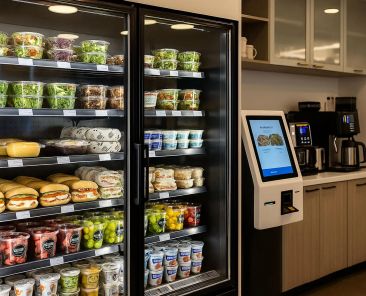
Learn how DFW smart coolers manage higher cold-drink demand, fresh food safety, temperature alerts, restocking, and power outages during Texas heat.
Learn how Alliance logistics facilities can plan vending service for truck drivers, contractors, visitors, and employees working around the clock.
Learn how shift changes affect vending demand, restocking, and product selection at Alliance warehouses and 24/7 distribution centers.

A practical guide for Texas facilities managers covering vending machine space, power, accessibility, food safety, insurance, and service planning.
Learn how Dallas offices, apartments, and commercial properties can qualify for free vending service with $0 installation, no long-term contract, and fast local support.