
Scroll Top

Office Vending Installation in Texas: What Facilities Managers Should Know

Installing an office vending machine may look like a small facilities project. Once the equipment arrives, however, the facilities manager is often responsible for everything surrounding it: building approval, electrical access, delivery coordination, employee complaints, vendor communication, and property protection.

The machine itself may belong to the vending provider, but the installation still affects the office layout and daily operation.

A Texas facilities manager recently learned this while preparing to add cashless vending to a growing office. The company had increased from 40 employees to more than 70, and staff members were asking for drinks, snacks, and fresh food. 

Management approved the idea quickly and selected an open section of the breakroom for the machine.

During the site assessment, several issues appeared. The outlet already powered a microwave and coffee brewer. The planned location reduced clearance around the refrigerator. The delivery route included a narrow hallway turn, and the property manager required insurance documents before equipment could enter the building.

The project was still workable, but the facilities manager needed a clearer installation plan. That experience shows why office vending installation in Texas should begin with a detailed site review rather than a delivery date.

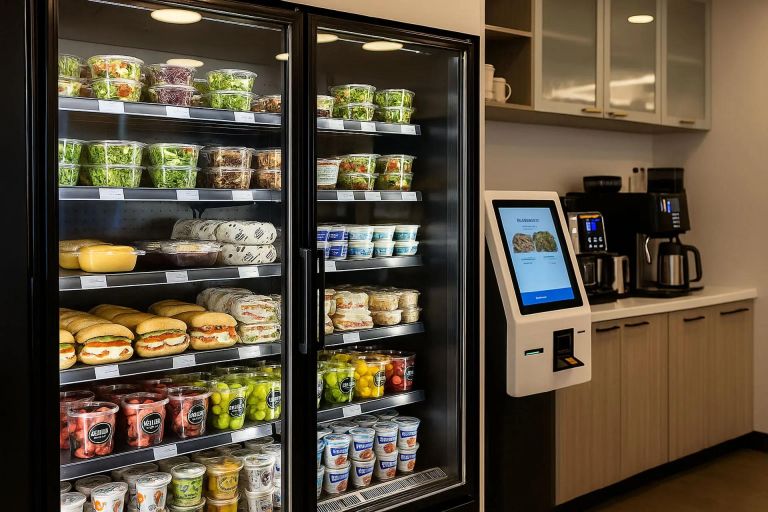
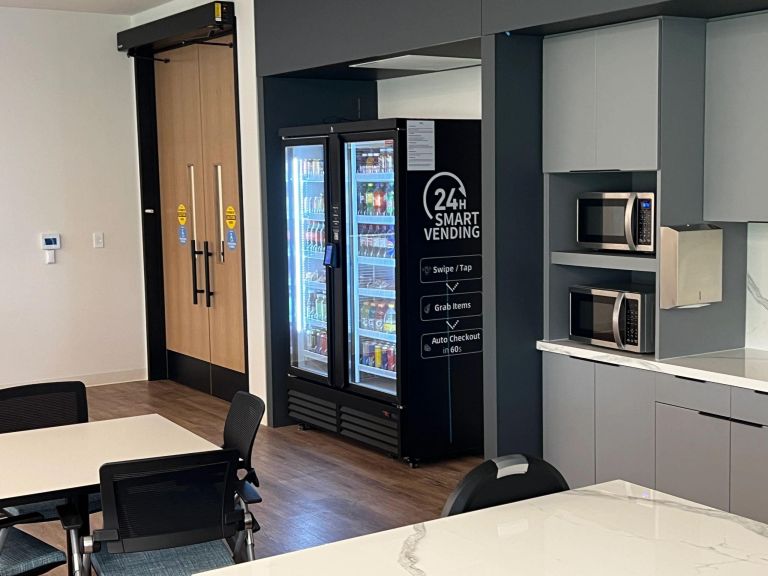
office lounge smart cooler vending machine

Evaluating Space, Power, Accessibility, and Building Access

The first responsibility is confirming that the equipment can be delivered, installed, and used safely.

An empty wall does not automatically mean the space is suitable. The vending provider should supply the machine dimensions, including depth, height, width, ventilation clearance, and the space required to open service panels or doors.

The surrounding layout also matters. A machine should not block cabinets, refrigerators, fire equipment, exits, electrical panels, or normal walking paths. Employees need enough room to stand in front of the equipment, use the touchscreen or card reader, retrieve products, and move away without creating congestion.

Accessibility should be reviewed before placement is approved. The machine should be located along an accessible route and should not create an obstruction. Facilities managers should consider clear floor space, reach ranges, and the position of payment controls. The U.S. Department of Justice ADA Standards provide guidance for accessible routes and operable parts.

Electrical access is another major consideration. Refrigerated vending machines, drink machines, combo machines, and smart coolers require a dependable power source. 

The exact electrical requirements vary by model, so facilities managers should obtain equipment specifications before approving the location.

Extension cords should not become a permanent solution. OSHA guidance states that flexible cords cannot replace permanent building wiring. Power strips may also be inappropriate for equipment with refrigeration components or higher electrical loads.

The facilities manager in the opening scenario asked the building electrician to review the circuit. The machine was moved to another wall with a suitable outlet rather than sharing power with several breakroom appliances. That small change helped prevent overloaded circuits and unexpected shutdowns.

Delivery access should also be checked in advance. Facilities managers may need to confirm loading-dock hours, freight elevator dimensions, doorway widths, hallway turns, floor transitions, and security procedures.

Multi-tenant buildings may require elevator padding, floor coverings, delivery reservations, or work outside normal office hours. Some landlords also require written approval before large equipment is placed inside a leased suite.

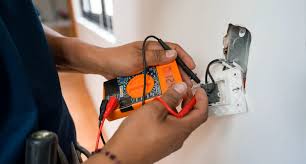
testing an electric outlet
texas vending logo

Ready to Upgrade Your Break Room?

Texas Vending helps offices add coffee, snacks, fresh food, smart coolers, and micro market service without extra work for your staff.

Get a local team, flexible setup, no long-term contract, and fast support for your break room.
Planning Equipment, Products, and Food-Safety Responsibilities

Once the site is approved, the facilities manager should review which type of vending setup fits the office.

A traditional cashless snack or drink machine works well for offices that mainly need packaged snacks, bottled water, soda, tea, and energy drinks. A smart cooler can add refrigerated products such as salads, wraps, yogurt, sandwiches, and protein drinks. Larger workplaces may qualify for a micro market with open shelves, coolers, fresh food, and self-checkout.

Employee count, daily visitors, office hours, break schedules, and available space should guide the decision.

A 55-person office may only need one combination machine and coffee service. A call center with 150 employees may require separate snack and drink machines. A corporate headquarters with training rooms and visiting employees may benefit from a micro market and office coffee program.

Texas Vending generally considers locations with at least 50 employees or approximately 50 daily visitors for free vending placement. Qualification also depends on access, security, operating hours, expected sales, and available space.

A machine stocked only with packaged snacks and bottled drinks is usually easier to manage. Texas Department of State Health Services guidance states that operations offering only prepackaged foods that do not require time and temperature control generally do not need the same retail food permitting as fresh-food operations.

Smart coolers and micro markets may carry salads, prepared meals, wraps, sandwiches, yogurt, and other refrigerated products. These items require temperature control, product dating, rotation, and a clear plan for refrigeration failures.

Before approving fresh food, the facilities manager should ask who monitors temperature alerts, removes expired products, cleans the cooler, responds to equipment failure, and handles product-quality complaints.

In the office scenario, employees wanted healthier lunch choices. The provider recommended one cashless snack machine, one drink machine, and a smaller smart cooler. The agreement specified that the vending company would monitor refrigeration, rotate products, clean the equipment, and respond to temperature alerts.

That prevented the facilities team from becoming responsible for food inventory.

Product selection should also be reviewed after installation. The first assortment may not match employee preferences perfectly. Facilities managers should have a simple process for collecting requests and sharing them with the provider.

Popular drinks can receive more space. Slow-selling products can be removed. Fresh food can be adjusted based on actual sales rather than assumptions.


Setting Vendor Expectations Before Installation

The final responsibility is making sure the service agreement supports the office after installation.

Facilities managers should know who owns the equipment, who handles maintenance, how often the location will be restocked, and what happens if the company moves or closes the office.

The agreement should address equipment delivery, installation, removal, relocation, cleaning, repairs, payment refunds, product pricing, equipment damage, cancellation, and service response times.

Free installation should also be clearly defined. Facilities managers should ask whether it includes delivery, placement, payment-system setup, maintenance, future removal, and standard repairs.

Insurance requirements should be handled before delivery. The property manager may request a certificate of insurance, additional insured status, or proof of general liability coverage. Confirming these items early can prevent installation delays.

Service frequency should be tied to usage. A smaller office may initially need weekly restocking. A larger office or high-traffic location may require more frequent service. Remote inventory monitoring can help the vending provider track low-stock items, sales, and equipment alerts without waiting for an employee complaint.

The facilities manager in the scenario requested a clear response process before signing. Employees received a customer-service number for payment or product concerns. The provider agreed to monitor inventory, adjust products using sales data, and respond to equipment issues within the stated service window.

The office also confirmed that every machine would be cashless, accepting credit cards, debit cards, and mobile wallets.

Texas Vending offers cashless vending machines, smart coolers, micro markets, office coffee, water service, and fresh food programs across Texas and the DFW area. Qualified locations may receive equipment placement with no upfront installation cost and no long-term contract.

A successful office vending installation is not simply about choosing snacks and selecting a machine. It requires coordination between the vending company, building management, employees, and internal operations.

Before approving installation, confirm the equipment dimensions, electrical needs, accessible placement, delivery route, food program, insurance requirements, service schedule, repair responsibilities, and cancellation terms.

A well-planned vending setup can serve the office for years without adding unnecessary work to the facilities team. The planning completed before delivery usually determines how smoothly the program operates afterward.

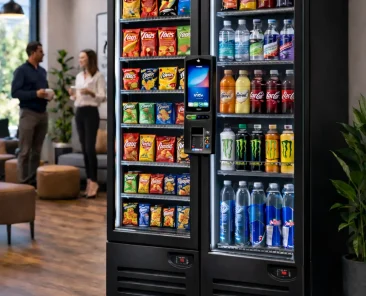
smart vending IoT

References

  1. U.S. Department of Justice, 2010 ADA Standards for Accessible Design
  2. Occupational Safety and Health Administration, Use of Flexible Cords and Cables
  3. Texas Department of State Health Services, General FAQs for Retail Food Establishments
  4. Texas Department of State Health Services, Self-Service Food Market FAQs
  5. U.S. Food and Drug Administration, 2022 Food Code

Transform Your Breakroom

Contact Us Now!

(614) 716 - 9068

Check out our blogs!