
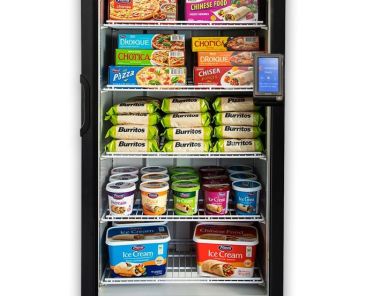
Scroll Top

Why Smart Fridge Placement Matters in Large DFW Offices, Warehouses, and Multi-Buildings

As a vending company provider for a long time, I’ve had my share of vending and smart fridge pull-outs because really, the machines are not earning well, worst it’s not even breaking even at all.  For those starting up a vending business, or is about to place their first hard earned equipment, here’s what I learned.

A smart fridge can be stocked with great food, accept cashless payments, and send inventory information back to the vending provider. Put it in the wrong part of the building, though, and none of that matters much.

Placement controls who can use the cooler, when they can use it, how quickly products sell, and how difficult the unit is to restock. In a small office, there may only be one reasonable spot. Large DFW offices, warehouses, and multi-building campuses are different. They have secured doors, separate departments, long hallways, freight elevators, shift changes, visitor areas, loading docks, and breakrooms that may be several minutes apart.

Dallas-Fort Worth had an estimated population of more than 8.4 million in 2025, and the region contains everything from corporate headquarters to enormous logistics campuses. At that scale, smart fridge placement cannot be decided by pointing to the first empty wall.

From the vending side, I would rather place a cooler in a plain breakroom that employees pass six times a day than in a beautiful lobby almost nobody uses.

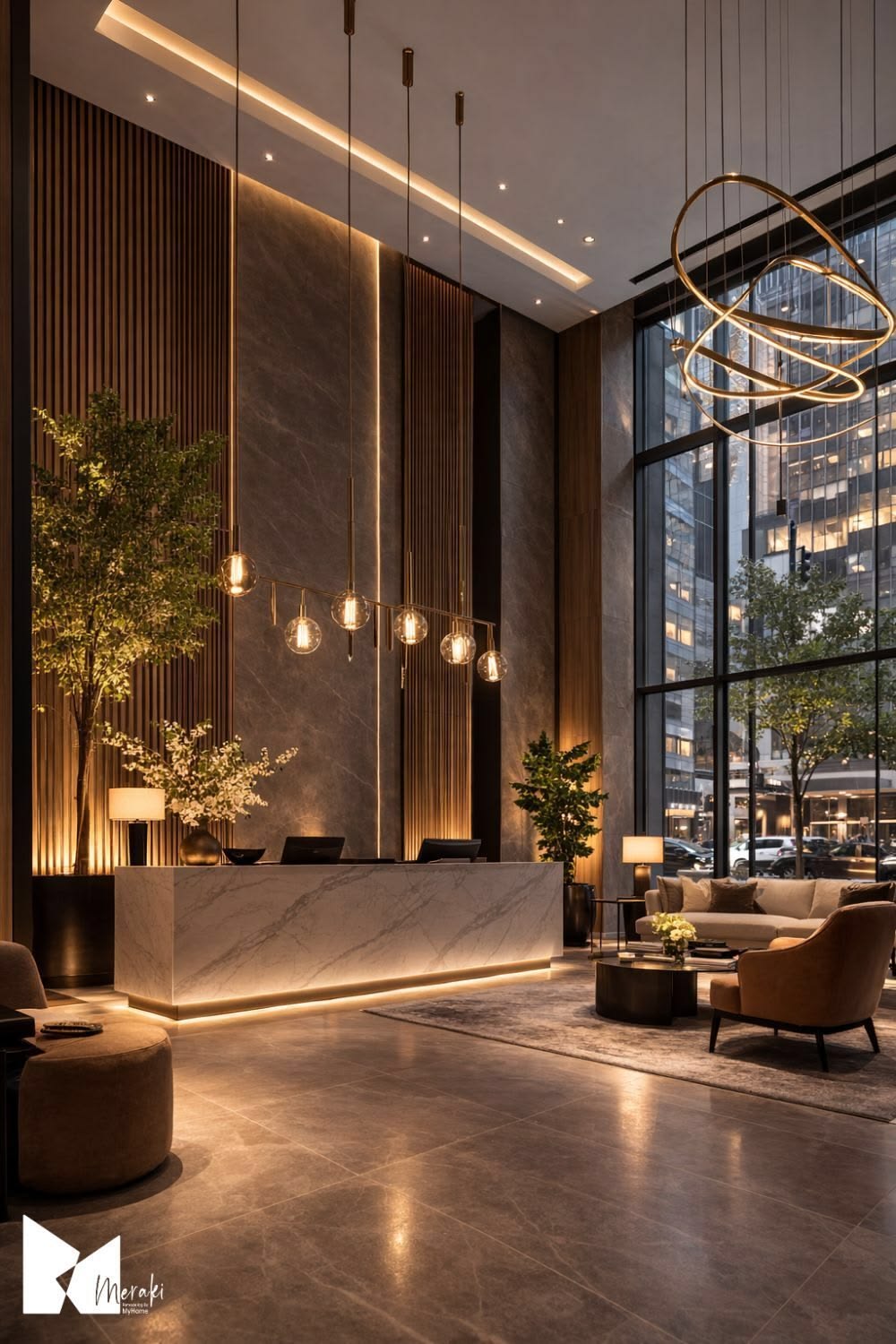
hotel lobby at nyc

The Best-Looking Location Is Often the Wrong Location

Here’s a scenario in a corporate campus with 420 employees spread across three buildings.

Building A contains executives, conference rooms, and the main reception area. Building B holds accounting, customer service, and human resources. Building C has operations, training rooms, and employees who arrive earlier and leave later.

The facilities team places one smart fridge in Building A because its lobby looks polished and has plenty of open space. The unit photographs well. Visitors notice it. Management can see it from the conference rooms.

Sales are disappointing.

Employees in Building B would need to cross an outdoor walkway and pass through another secured entrance. The operations team in Building C has no reason to visit the executive lobby. Most purchases come from reception staff and people attending meetings.

The cooler is not failing. The location is.

A smart fridge should sit along a natural employee path. Good placement usually means a breakroom, cafeteria area, shared kitchen, time-clock area, training center, or corridor connecting departments. 


The right spot is somewhere people already stop, not somewhere management hopes they will start visiting.

Access hours matter too. A smart fridge behind a reception area that locks at 6 p.m. cannot serve an evening crew. A unit inside an employee-only breakroom will not help drivers or contractors waiting near receiving. A warehouse cooler placed in the front office may be invisible to the people working on the floor.

Alliance Texas alone spans roughly 27,000 acres and includes corporate campuses, offices, industrial facilities, healthcare, retail, aviation, and residential areas.  Large DFW properties often function like small neighborhoods. One cooler near the main entrance may not serve the actual workforce.

Placement also needs to account for accessibility and emergency movement. The cooler should not narrow an accessible route, block a doorway, or interfere with exit travel. Federal accessibility standards require at least one of each type of vending machine to meet applicable operable-part and reach requirements, while OSHA requires exit routes to remain unobstructed.

A unit can fit against a wall and still be in the wrong place.

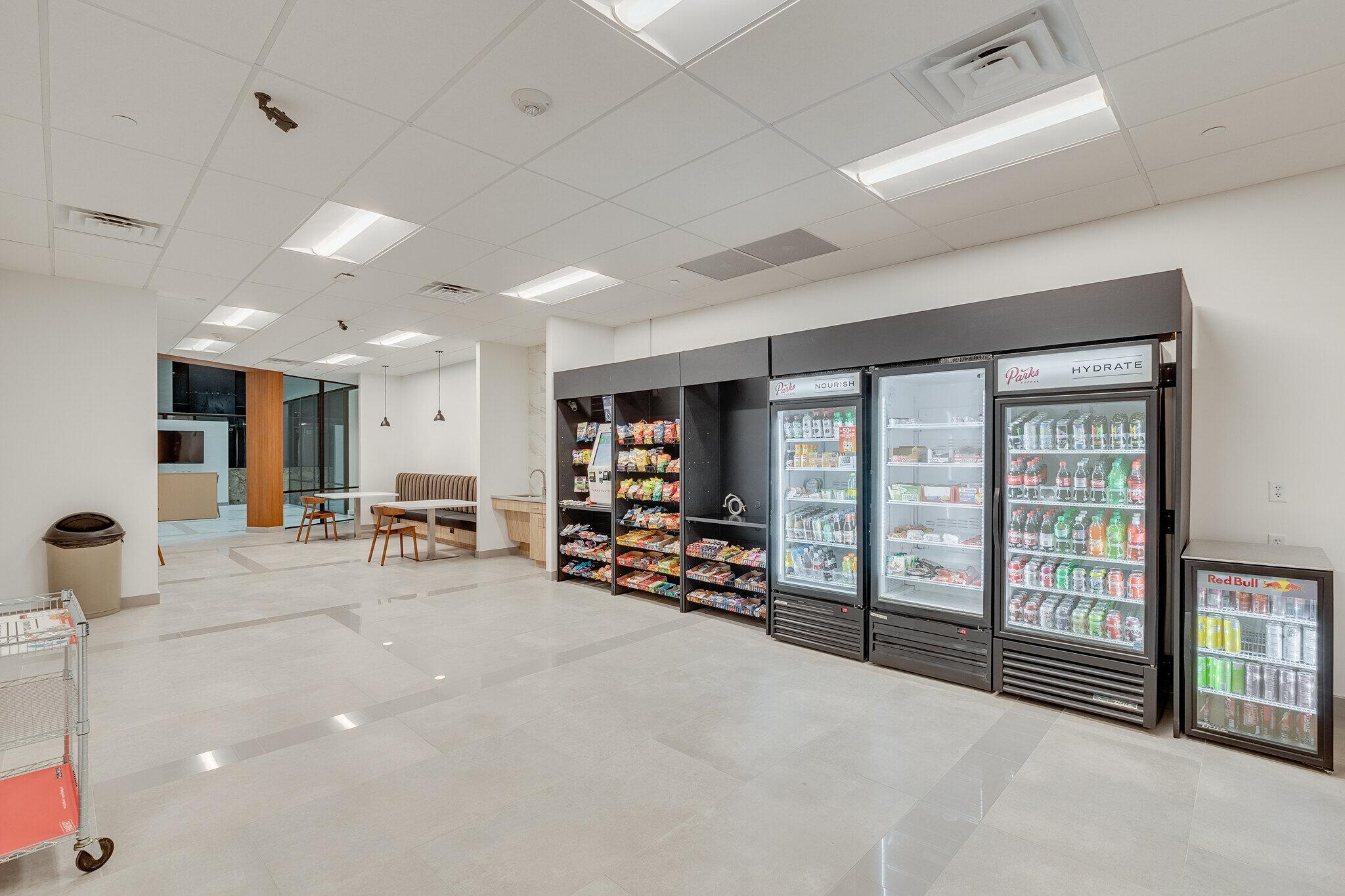
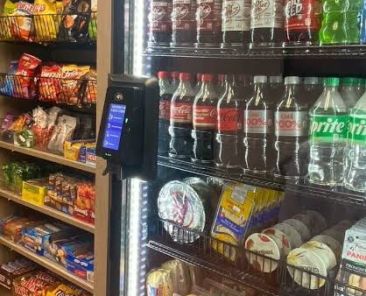
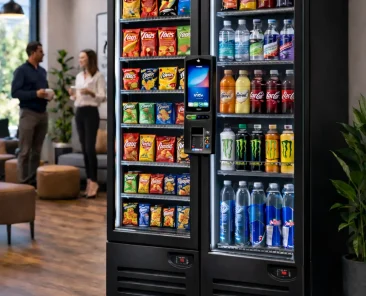
micro market with a smart fridge placement in a large DFW corporate office campus
texas vending logo

Ready to Upgrade Your Break Room?

Texas Vending helps DFW offices add coffee, snacks, fresh food, smart coolers, and micro market service without extra work for your staff.

Get a local team, flexible setup, no contract, and fast support for your break room.
Placement Changes Sales, Product Freshness, and Route Service

The second issue is less visible to the facility manager but obvious to the vending operator.

Every extra door, elevator ride, security checkpoint, and loading restriction affects restocking. A route driver should not need an escort through four secured areas just to bring in sandwiches and bottled water. That slows service and makes emergency visits harder.

Now picture a 300-person DFW warehouse running two shifts. The smart fridge is placed in a small office breakroom near the front entrance. Office employees use it regularly, but warehouse staff have a separate breakroom on the opposite side of the building.

Management sees low sales and assumes employees do not want fresh food.

That conclusion is wrong. The people most likely to buy wraps, breakfast sandwiches, energy drinks, protein items, and cold meals are several hundred yards away.

Moving the fridge closer to the warehouse breakroom changes the account. Morning demand increases. Second shift starts buying fresh meals. Water and electrolyte drinks sell faster. The provider now has enough sales data to build a product mix around the actual users.

Placement affects food turnover as well. Fresh items need steady demand. If the unit sits in a quiet corner, sandwiches and salads may remain unsold while employees elsewhere in the building complain that there are no meal options. The problem is not necessarily the menu. Sometimes the food is simply too far away.

Environmental conditions matter. A smart cooler should not sit in direct afternoon sunlight, beside a loading door that stays open, or in a cramped enclosure with poor airflow. A unit in a climate-controlled breakroom will usually have a more stable operating environment than one placed near a hot warehouse entrance.

Power and connectivity should be confirmed before the location is approved. Smart-store equipment may rely on electrical power and cellular, Wi-Fi, or Ethernet connectivity for payment processing, remote inventory, and temperature monitoring. A strong phone signal at the conference table does not automatically mean the cooler will have dependable connectivity inside a concrete warehouse breakroom.

The service path should be tested as carefully as the customer path. Where does the route driver park? Can a cart reach the cooler? Does security permit access before the morning shift? Is a freight elevator required? Can the driver service multiple units without crossing the entire campus?

These questions are not glamorous, but they decide whether the cooler stays full.

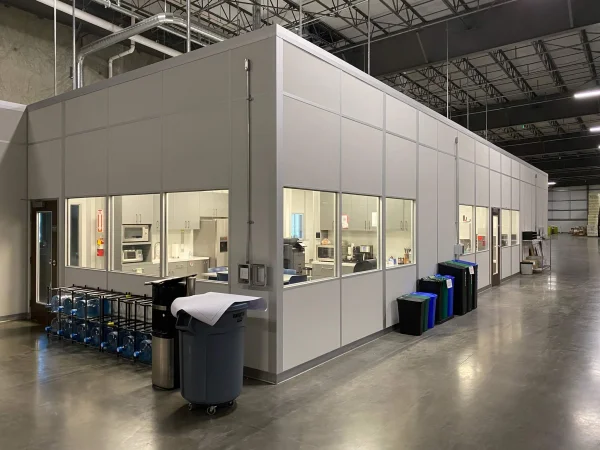
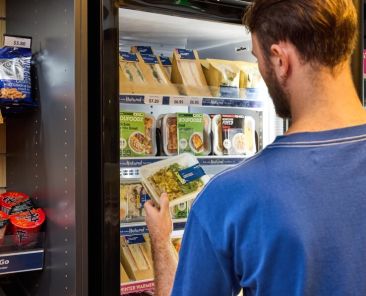
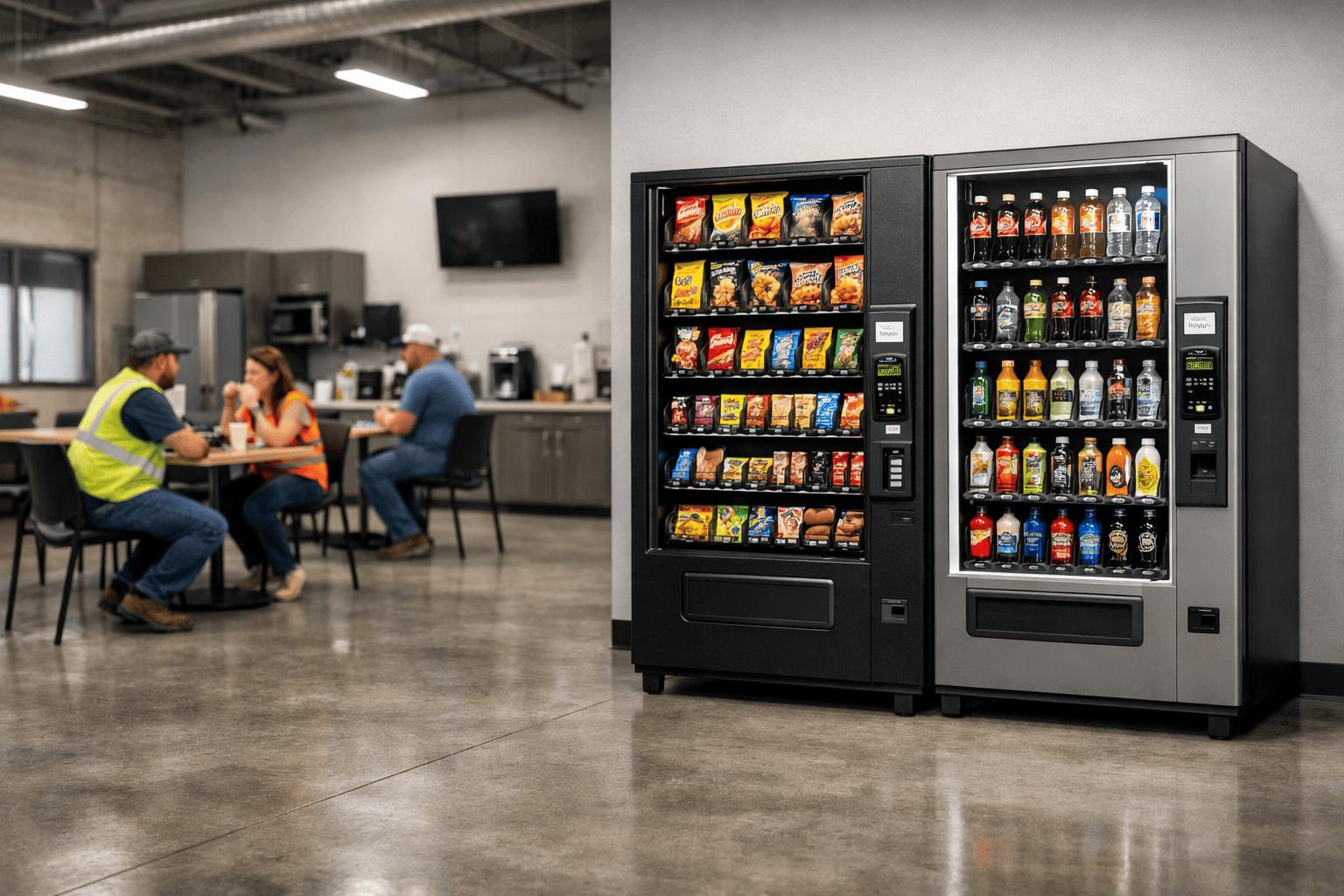
warehouse breakroom with a smart fridge near employee seating

How to Plan Smart Fridge Placement Across a
Large Property

For the three-building campus, one cooler was never enough. The better plan was one smart fridge serving Buildings A and B near their shared connector, plus another unit in Building C near the operations breakroom.

The first cooler carried salads, wraps, sparkling water, iced coffee, yogurt, and office snacks. The operations cooler carried more bottled water, energy drinks, protein items, breakfast food, sandwiches, and filling meals.

Same campus. Different traffic. Different inventory.

A site review should follow employees through a normal day. Watch where they enter, clock in, take breaks, attend training, and change shifts. Ask whether all employees share the same badge access.

Count daily users by building, not just the company’s total headcount.

Texas Vending generally considers DFW locations with at least 50 employees or approximately 50 daily visitors for free smart cooler placement. A large campus may support multiple units, but each proposed location still needs enough real traffic, suitable power, dependable access, and a practical restocking route.

The right answer is not automatically one cooler per building. Two connected buildings may share one strong location. A remote warehouse wing may need its own unit even if its headcount is smaller. Placement should follow actual use.

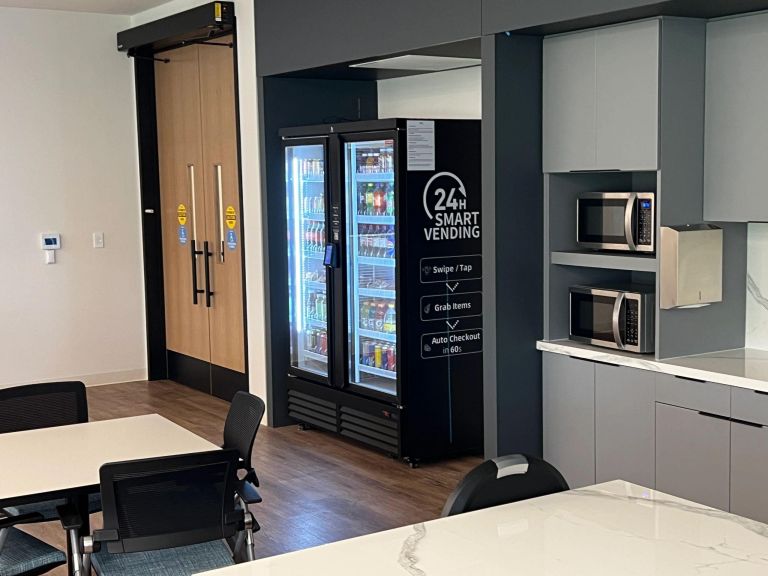
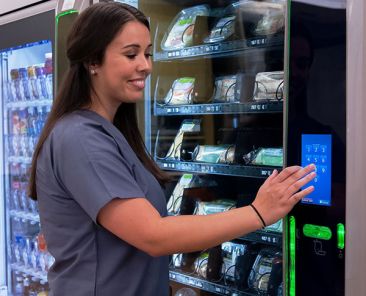
smart fridge placement across a multi-building DFW campus

References

  1. U.S. Census Bureau, 2025 Population Estimates for Metropolitan Areas.
  2. Alliance Texas, AllianceTexas Interactive Map and Development Overview.
  3. U.S. Department of Justice, 2010 ADA Standards for Accessible Design.
  4. Occupational Safety and Health Administration, Design and Construction Requirements for Exit Routes.
  5. Cantaloupe, Smart Store 600 Technical Specifications and Smart Cooler Technology.

Transform Your Breakroom

Contact Us Now!

(614) 716 - 9068

Check out our blogs!