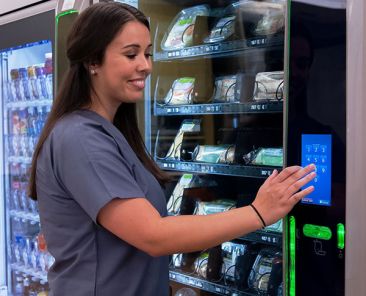

See how smart coolers bring real meals such as chicken pesto penne, salmon, quesadillas, wraps, fried rice, and protein bowls into North Texas workplace break rooms.
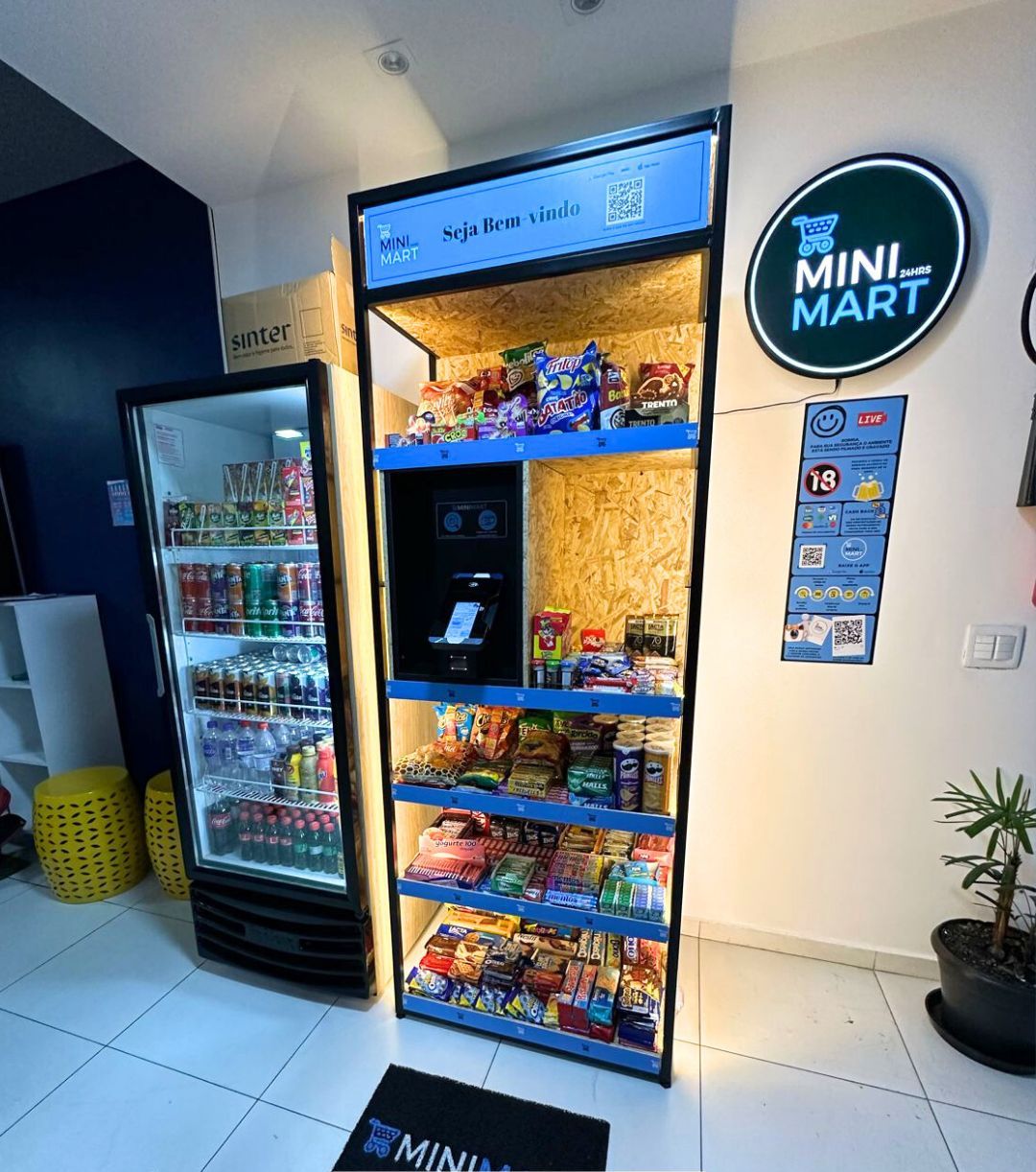
Has Your Workplace Outgrown Traditional Vending? How Employee Growth and Demographics Change Break Room Demand
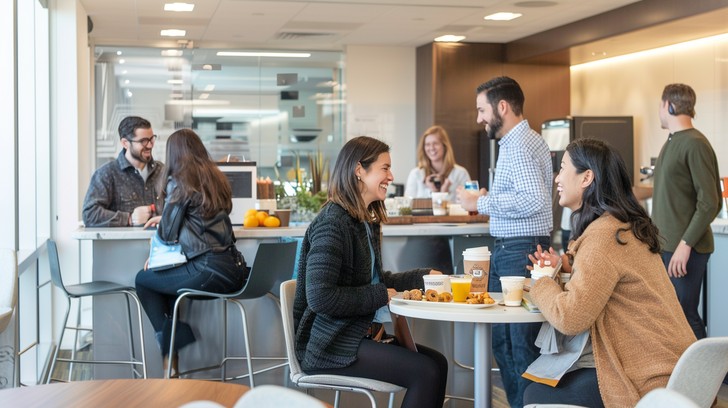
A vending setup that worked for 60 employees often looks very different after the workplace grows to 120 people, adds another shift, expands into another department, or starts receiving heavier visitor traffic.
Headcount is only one part of the change. Employee age, work schedule, job type, visitors, break length, food preferences, coffee use, and building layout all affect what people purchase.
The answer is not automatically another vending machine.
Some locations need more beverage capacity. Others need refrigerated meals, another service point, stronger office coffee & tea service, a smart cooler, or a full micro market.
Texas Vending looks at the people using the break room and the sales data behind their purchases before recommending the next step.
Employee Growth Changes Capacity Before the Equipment Looks Empty
Headcount, Shifts, and Visitor Traffic Change How Fast Products Move
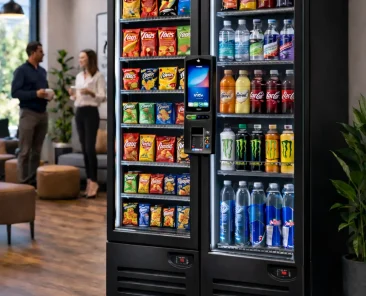
Traditional vending works well when a workplace has a stable employee count, predictable breaks, and one main traffic area. Growth changes that balance. More employees create more transactions, and the effect becomes stronger when added headcount works different shifts, uses separate entrances, or takes breaks at the same time.
A larger warehouse team increases bottled drink and snack volume. A medical office with more patients and visitors adds traffic that behaves differently from repeat employee traffic. A corporate office that adds several departments puts more pressure on coffee, cold drinks, and lunch choices during narrow morning and midday periods.
Texas Vending looks beyond total headcount. The useful numbers are employees by shift, daily visitors, break schedules, service-point location, and product depletion between route visits. If several high-volume selections repeatedly run low before the next service, the current setup has reached a practical limit even if other rows still look full.
Growth also changes traffic inside the building. New departments use different hallways, entrances, and break areas. A service point that worked for the original staff sometimes sits too far from a new production line or office wing. Equipment capacity and physical access need to be reviewed together.
Age and Demographics Influence Demand, but Sales Data Has the Final Say
Workplaces rarely contain one age group or one purchasing pattern. The U.S. labor force spans younger workers, mid-career employees, and a large 55-and-older group. BLS data for 2025 shows workers age 55 and older represent nearly 23 percent of the civilian labor force. Break room planning should not assume one demographic profile.
Age helps explain part of demand, but it should not become a stereotype. Younger employees do not all buy energy drinks, and older employees do not all choose coffee or low-sugar products. Demographic information works best as a starting point for assortment planning, followed by transaction data.
Coffee offers a useful example. National Coffee Association data released in 2026 reported especially strong specialty-coffee consumption among adults ages 25 to 39. That does not mean every younger workforce needs the same coffee program. It tells the provider to measure coffee use carefully when the employee mix changes.
Visitor demographics also deserve separate treatment. A dealership, medical center, apartment property, college facility, and manufacturing plant attract different visitor patterns. Employees return every week. Many visitors do not. Equipment decisions should reflect repeat usage, dwell time, operating hours, and actual purchases rather than raw door traffic.
Ready to Upgrade Your Break Room?
Texas Vending, your friendly neighborhood vending provider helps DFW warehouses and facilities add coffee, snacks, fresh food, smart coolers, and micro market service without extra work for your staff.
Get a local team, flexible setup, no contract, and fast support for your break room.

Product Demand Determines the Next Break Room Format
Growth does not always require another vending machine. The existing equipment still has enough total capacity in some locations while the workplace wants products that traditional vending handles poorly.
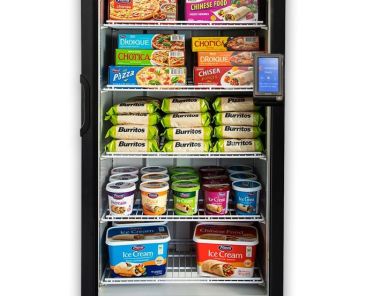
Fresh meals are the clearest example. Sandwiches, wraps, salads, yogurt, breakfast items, protein boxes, and refrigerated drinks require more cold space and tighter inventory control. A traditional snack machine cannot absorb that demand without removing products employees already buy.
The next step depends on sales data. Strong packaged snack and bottled drink demand points toward additional vending capacity. Strong refrigerated meal demand points toward a smart cooler. Sustained demand across snacks, drinks, meals, and several departments points toward a micro market. Heavy morning beverage use supports stronger office coffee and tea service without changing the vending bank.
Cantaloupe recommends using transaction data to evaluate product assortment and machine performance, then changing the mix around bestsellers and weak performers. Its Seed Pro platform also supports par-level changes, planogram updates, and pre-kitting based on machine-level information. That keeps expansion decisions tied to measured demand.
Fresh food changes the service requirements. Texas DSHS treats self-service food markets with refrigerated time-and-temperature-controlled products as retail food operations with specific cold-holding and servicing requirements. A larger fresh-food program needs enough sales volume to support rotation, date checks, cleaning, and replenishment.
Sales Mix Shows When Traditional Vending Has Reached Its Limit
The Right Upgrade Should Follow the People Using the Space
A workplace has outgrown traditional vending when the current format no longer matches the people, traffic pattern, or product demand at the site.
A second vending machine works when packaged products sell through faster than the existing machine holds them. A smart cooler works when refrigerated food demand grows beyond a few selections. A micro market fits locations with sustained traffic, broader meal demand, enough space, and a known employee population. A second service point works when the building layout forces one group to walk too far for a short break.
Employee growth should also change coffee planning. Adding 50 office employees puts pressure on brewer capacity, cups, creamers, sweeteners, and restocking quantities. Adding 50 warehouse employees changes cold drink and meal demand far more than coffee. A mixed-age workforce needs a broader selection rather than a single product category built around one assumed preference.
Texas Vending reviews employee count, age range, visitor profile, shift schedule, sales history, fresh-food turnover, coffee use, available space, and equipment location before recommending an upgrade.
Qualified North Texas locations receive equipment with $0 installation cost, No long-term contract, and a 24-hour response time for reported service issues. Texas Vending handles traditional vending, smart coolers, micro markets, fresh food, office coffee, equipment repair, and equipment moving as workplace needs change.
A Micro Market Becomes the Better Expansion Once Demand Outgrows Individual Machines
There is a point where adding machine after machine stops being the strongest layout.
A workplace already operating several vending machines and a refrigerated cooler may have enough employee demand to support a centralized micro market.
Micro markets expand selling capacity beyond fixed vending spirals and columns. Employees select products from open shelving and refrigerated equipment and pay through self-checkout. Cantaloupe describes micro markets as unattended self-service retail spaces that combine food and drink selections with kiosk checkout.
Texas Vending looks at employee population, sales volume, meal demand, security, available space, operating hours, and shift activity before recommending that transition.
A micro market works best when the workplace has enough repeat purchasing activity to support the larger assortment and fresh-food inventory.
Fresh food changes the operating requirements.
Prepared sandwiches, salads, wraps, yogurt, and refrigerated meals require date control, proper temperatures, rotation, cleaning, and consistent restocking. Texas DSHS requires self-service food markets selling time-and-temperature-controlled products to use appropriate cold-holding protections and outlines route-driver responsibilities for checking dates, cleaning equipment, and replenishing inventory.
The market therefore needs sales volume strong enough to move refrigerated products before waste becomes excessive.
More Equipment Is Not Always the Best Answer
Expansion Should Solve a Measurable Problem
Texas Vending does not add equipment simply because a workplace has crossed a particular employee number.
The existing service data should show the reason.
Frequent stockouts point toward additional capacity. Long transaction lines point toward another payment point. Employees walking across a large facility point toward another service location. Strong refrigerated meal sales point toward another cooler. Growing product variety and sustained transaction volume point toward a micro market.
Connected smart-store systems also support expansion through multiple cabinets linked to a single point of sale. Cantaloupe’s current Smart Store platform supports scaling one setup to several connected units where additional capacity is required.
Texas Vending evaluates those conditions as part of ongoing account management.
Qualified North Texas workplaces receive equipment with $0 installation cost, No long-term contract, and a 24-hour response time for reported service issues. Texas Vending also handles equipment repair and relocation when employee traffic shifts or a break room moves.
A North Texas company that installs vending machine for free should not stop at installing the first machine. The provider needs to recognize when the location has outgrown it.
The right time to add a second vending machine, smart cooler, or micro market is when real sales and employee movement show that the existing setup no longer covers demand efficiently.
References
- U.S. Bureau of Labor Statistics — Civilian Labor Force by Age, Sex, Race, and Ethnicity
Supports the workforce-age discussion and current labor-force distribution. BLS labor-force demographics - National Coffee Association — 2026 Specialty Coffee Consumption Report
Supports the discussion of age differences in specialty-coffee consumption, including strong participation among adults ages 25–39. NCA specialty coffee consumption data - Cantaloupe — Optimize Your Operations and Increase Revenue With Data
Supports using transaction data, customer demand, machine performance, and location demographics to adjust product assortment. Cantaloupe data and product optimization - Cantaloupe — Seed Pro Vending Management System
Supports par-level adjustments, planograms, inventory management, machine-level sales data, pre-kitting, and service scheduling. Cantaloupe Seed Pro - Texas DSHS — Self-Service Food Market FAQs
Supports micro-market operation, refrigerated fresh food, temperature controls, product dating, cleaning, and route servicing in Texas. Texas DSHS Self-Service Food Market FAQs
Check out our blogs!
Learn when employee traffic, sales volume, stockouts, shift schedules, and fresh-food demand justify adding a second vending machine, smart cooler, or micro market.
See how a local vending company handles stocking, repairs, fresh food, coffee, and employee requests while reducing break room complaints and staff workload.

Learn how Irving hospitals can provide after-hours meals, drinks, and fresh food for nurses, technicians, and overnight staff with smart coolers.