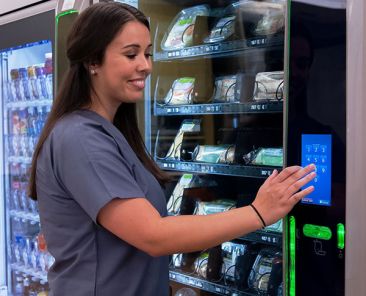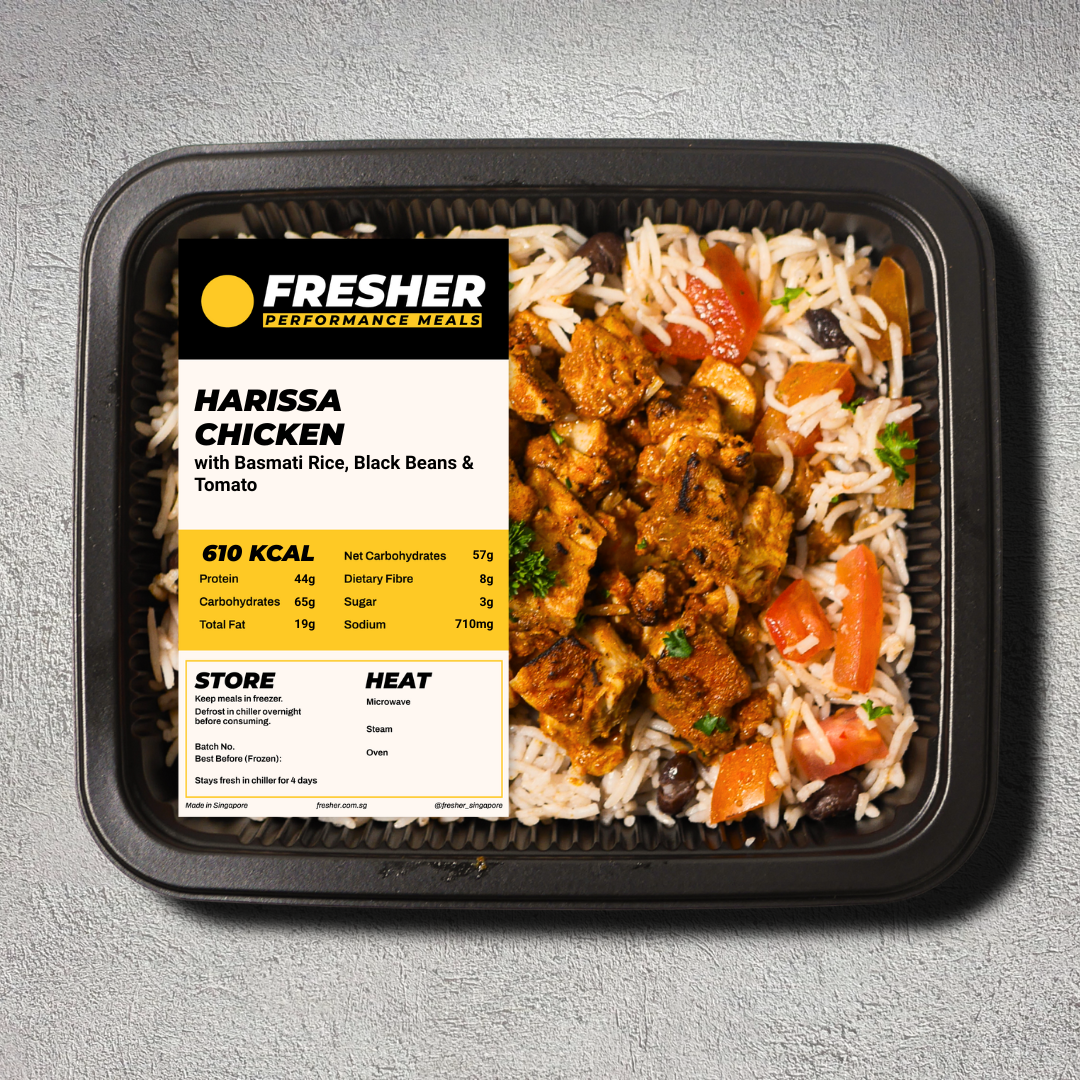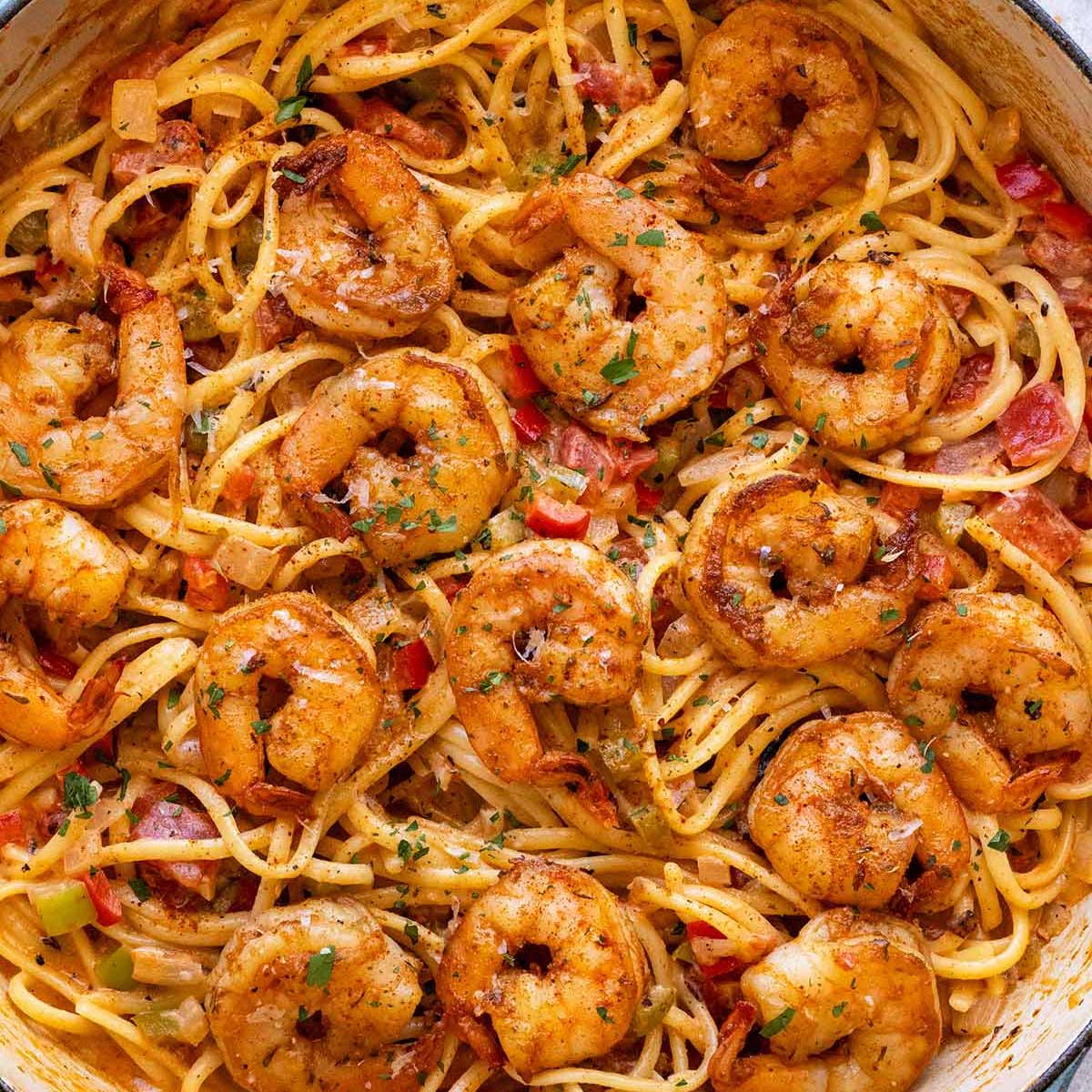

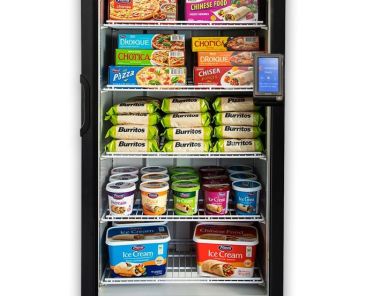
See how smart coolers bring real meals such as chicken pesto penne, salmon, quesadillas, wraps, fried rice, and protein bowls into North Texas workplace break rooms.
Meals Worth Taking a Break For: How Smart Coolers Bring Real Lunch Options to the Workplace
A workplace break does not have to mean chips, candy, and a bottled drink.
Smart coolers have changed what employers can offer inside a break room because refrigerated equipment gives vending operators room for complete meals instead of limiting the menu to traditional snack products.
That opens the door to food people actually recognize as lunch.
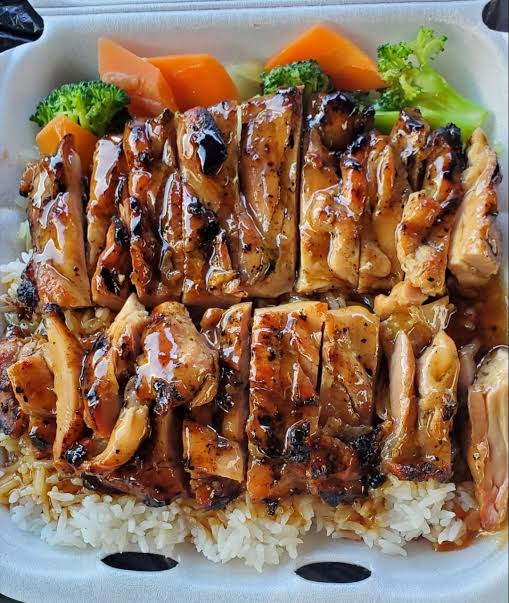
Southwest turkey chile meatloaf. Grilled chicken quesadillas. Turkey pesto wraps. Shrimp fried rice. Chicken pesto over penne. Chicken parmesan over zucchini noodles. Salmon with cauliflower mash and broccoli.
Those are very different choices from the typical image people have of workplace vending.
For warehouses, offices, medical facilities, manufacturing plants, dealerships, distribution centers, and other North Texas workplaces, the biggest advantage is variety. Employees can choose a lighter meal, a higher-protein option, something with rice or pasta, or a familiar comfort-food entrée without leaving the property during their break.
A smart cooler works best when the menu gives people a reason to open the door.
Smart Coolers Give Workplace Food a Much Bigger Menu
Lunch Does Not Have to Come Out of a Spiral
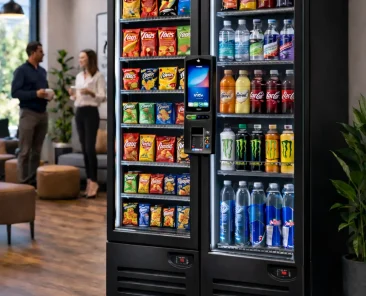
Traditional vending remains useful for packaged snacks, bottled drinks, energy drinks, chips, pastries, and protein bars. Those products fit short breaks and work well throughout the day.
Lunch creates a different need.
A worker halfway through a ten-hour shift may want something closer to a complete meal. That could mean grilled chicken with sweet potatoes and zucchini, ground turkey with jasmine rice and green beans, or salmon with cauliflower mash and broccoli.
A smart cooler creates space for meals that need refrigeration and proper cold holding.
Texas Vending can stock refrigerated smart coolers with prepared entrées, wraps, sandwiches, breakfast items, drinks, yogurt, salads, and other grab-and-go food based on the sales pattern at each location.
The menu should not look identical everywhere.
A manufacturing plant with a large production crew may sell heavily through protein-focused meals such as grilled chicken, ground beef, turkey, rice, potatoes, and vegetables. A corporate office may show stronger demand for wraps, quesadillas, lighter bowls, and salads. A medical facility operating late shifts may need a broad mix because employees are purchasing food across several time periods.
The smart cooler gives the provider enough flexibility to test those categories and follow the demand.
One Cooler Can Support Several Eating Preferences
Workplace demographics rarely point in one direction.
Some employees want familiar comfort foods. Others track protein. Some prefer vegetables over heavier sides. Others want rice, pasta, or potatoes because they need a more filling meal.
A strong menu gives them choices without turning the break room into a cafeteria.
Southwest turkey chile meatloaf offers a familiar hot-meal format with a different flavor profile.
Grilled chicken and roasted veggie quesadillas cover both meat and vegetable-forward selections.
A turkey pesto wrap works for someone who wants a meal without reheating a large entrée.
Shrimp fried rice and tofu fried rice add two different protein directions within the same basic meal format.
Chicken pesto over penne gives employees a pasta option, while chicken parmesan over zucchini noodles offers a lower-starch alternative.
Then there are meal-prep style combinations built around a protein, vegetable, and side: grilled chicken with sweet potatoes and zucchini, ground turkey with jasmine rice and green beans, chicken thighs with cauliflower mash and spinach, ground beef with brown rice or quinoa and broccoli, and salmon with cauliflower mash and broccoli.
That assortment gives a smart cooler a much broader role in the break room.
Ready to Upgrade Your Break Room?
Texas Vending, your friendly neighborhood vending provider helps DFW warehouses and facilities add coffee, snacks, fresh food, smart coolers, and micro market service without extra work for your staff.
Get a local team, flexible setup, no contract, and fast support for your break room.
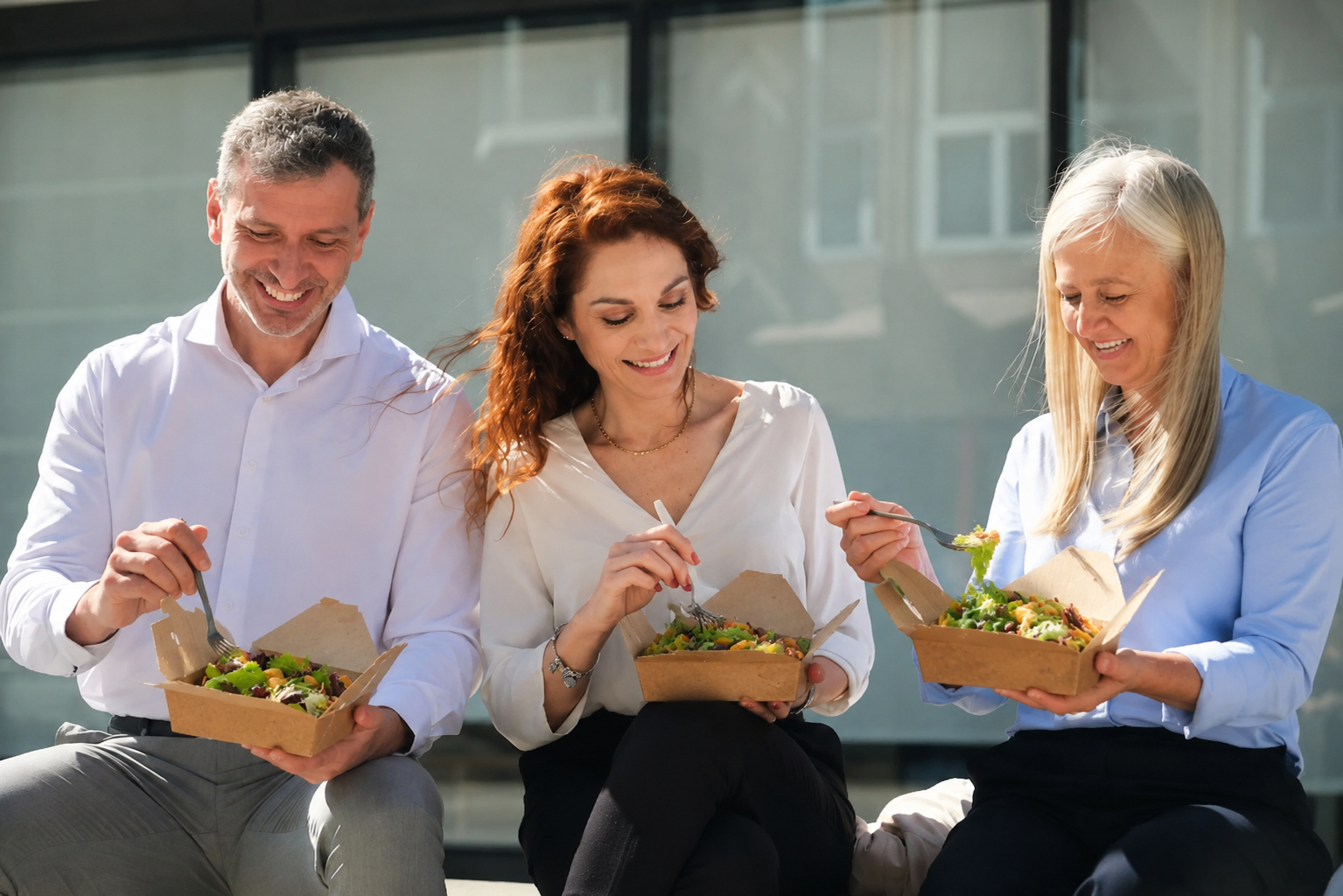
Better Meal Variety Gives Employees a Reason to Stay Onsite
A 30-minute lunch period does not always provide 30 minutes of actual eating time.
Employees may spend several minutes walking across a warehouse, waiting for an elevator, getting through a security door, reaching the parking lot, driving somewhere nearby, waiting for food, and returning to the building.
Onsite food changes that calculation.
A refrigerated entrée already sitting inside the employee break area removes the offsite trip. The employee selects a meal, completes the purchase, heats it if needed, and uses more of the break for sitting and eating.
That difference becomes especially important in large DFW warehouses, distribution centers, hospitals, manufacturing facilities, and multi-building campuses where getting to a nearby restaurant takes longer than it looks on a map.
Smart cooler placement also affects how useful the program becomes. A cooler serving production employees should sit near the employee traffic path rather than a front lobby used primarily by visitors. A hospital cooler serving nurses and technicians needs access during late shifts. A large warehouse may need a second service point if employees work on opposite ends of the building.
The Break Is Longer When the Food Is Already There
Better Food Also Changes How Employees View the Break Room
Employees notice when the break room has not changed in years.
The same snack selections, the same drinks, and no real lunch options eventually make the area feel like an emergency backup rather than somewhere employees expect to buy food.
A smart cooler changes that perception because the menu rotates.
Turkey pesto wraps do not need to occupy the same space every week. A high-performing chicken meal can receive additional capacity. Slow-moving products can leave. Seasonal options can enter. Different meal-prep combinations can rotate through the cooler without replacing the equipment.
That keeps the food program responsive to actual purchasing behavior.
For Texas Vending, sales information helps determine what returns on the next order. The menu should become more accurate over time instead of remaining frozen around the original installation plan.
Fresh Meals Require Stronger Service Behind the Cooler
A smart cooler full of good meals only works when the food is properly managed.
Fresh prepared meals have a shorter selling period than packaged snacks. The provider has to watch product dates, cold-holding temperatures, sales velocity, inventory levels, and waste.
The amount placed into the cooler should match how quickly employees actually purchase it.
If salmon meals sell slowly, stocking twenty of them does not improve the program. If grilled chicken and turkey meals repeatedly sell through before the next visit, those products need more space.
The same applies to menu categories.
Pasta may sell heavily in one location while rice bowls perform better somewhere else. A plant with physically demanding work may show stronger demand for larger protein meals. An office may produce higher sales on wraps, salads, and lighter entrées.
Good fresh food service learns those differences.
Technology supports that process through transaction reporting and remote inventory visibility, but route service still has to execute the plan. Employees ultimately judge the program by what is available when they open the cooler.
Refrigerated Food Has to Be Managed Differently
The Menu Should Get Better After Installation
A smart cooler should not receive one menu on installation day and keep it forever.
Texas Vending reviews sales and adjusts the assortment based on what employees actually purchase. Popular meals gain space. Weak items get replaced. Fresh-food quantities change with demand. Drink selection changes with season and shift patterns.
The program can also work alongside existing vending, office coffee, or a larger micro market.
Traditional vending handles packaged snacks and beverages. The smart cooler handles refrigerated meals. Coffee serves morning and overnight demand. A micro market adds even more shelf and refrigerated capacity when the location grows beyond one cooler.
Workplaces may receive equipment with $0 installation cost, No long-term contract, and a 24-hour response time for reported service issues.
The bigger difference, though, is what employees see when they take a break. Instead of choosing between a candy bar and leaving the building, they could open a cooler and find grilled chicken with vegetables, shrimp fried rice, a turkey pesto wrap, chicken pesto penne, a quesadilla, or salmon with cauliflower mash.
That is a break room people actually want to use. And that is what a smart cooler should deliver: meals worth taking a break for.
References
- Texas DSHS — Self-Service Food Market FAQs
Supports fresh food, refrigerated coolers, date checks, cold-holding requirements, route servicing, and self-service food markets in Texas. - FDA — 2022 Food Code
https://www.fda.gov/food/fda-food-code/food-code-2022
Supports refrigerated food safety, temperature control, date marking, and ready-to-eat food handling. - Cantaloupe — Smart Stores
Supports smart refrigerated retail, remote inventory management, multiple product configurations, and self-service purchasing. - Cantaloupe — Micro Markets
Supports workplace micro markets, coolers, self-checkout, compact markets, and AI-powered refrigerated retail equipment. - Cantaloupe — Smart Coolers / Self-Service Retail
Supports smart cooler technology, remote monitoring, self-service food retail, and connected refrigerated equipment.
Check out our blogs!
Learn when employee traffic, sales volume, stockouts, shift schedules, and fresh-food demand justify adding a second vending machine, smart cooler, or micro market.
See how a local vending company handles stocking, repairs, fresh food, coffee, and employee requests while reducing break room complaints and staff workload.
Learn how Irving hospitals can provide after-hours meals, drinks, and fresh food for nurses, technicians, and overnight staff with smart coolers.