
Scroll Top

When Does a Workplace Need a Second Vending Machine,
Smart Cooler, or Micro Market?

One vending machine may serve a 60-person office perfectly and struggle inside a 200-person warehouse. The difference is not simply headcount. Break schedules, product velocity, shift coverage, walking distance, equipment capacity, fresh-food demand, and transaction volume determine when a workplace has outgrown its current setup.

Adding equipment too early spreads sales across unnecessary machines and adds operating cost. Waiting too long produces repeated stockouts, crowded break periods, weak second-shift availability, and employees leaving the property for food and drinks.

Texas Vending looks at actual usage before recommending additional equipment. Sales history, depletion rates, employee distribution, service frequency, and the physical layout provide stronger answers than an arbitrary employee threshold.

The decision usually falls into three areas: the existing equipment has reached practical capacity, employee traffic has expanded beyond one service point, or the workplace now needs a different type of food and beverage program.

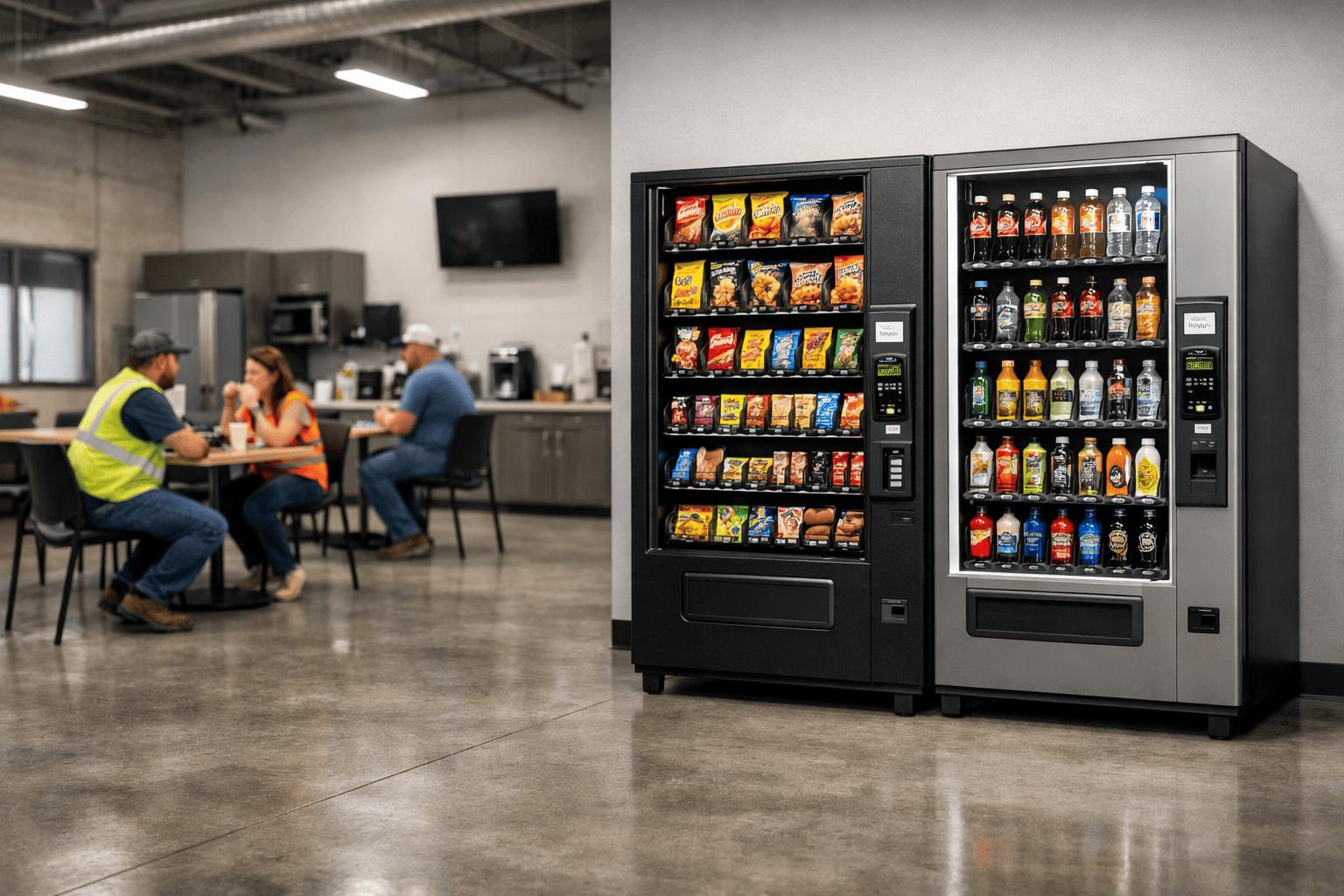
warehouse breakroom with a smart fridge near employee seating
smart cooler at the stairwell

The Existing Equipment Is Reaching Its Sales and Inventory Capacity

Repeated Stockouts Show a Capacity Problem

A machine that sells out occasionally does not automatically justify another machine. Repeated depletion of multiple high-volume selections between service visits varies per location and can be a different story.

Connected vending management systems track machine-level inventory, product movement, par levels, and restocking requirements. Cantaloupe’s Seed Pro uses machine data to adjust par levels, update planograms, create service schedules, and prepare machine-specific pre-kits.

If bottled water sells out every week while half the snack selections remain full, Texas Vending first adjusts the product mix and increases water capacity. If several beverage categories, snacks, and meal selections continue reaching low inventory before the next service, the location is approaching the physical limit of the existing equipment.

Increasing service frequency has limits too. Sending a route driver every day to refill equipment that lacks enough capacity creates unnecessary labor and transportation expense. At that point, adding another machine or cooler provides more product capacity at the location and reduces pressure on the original unit.

Transaction concentration also deserves attention. A workplace where 100 employees take lunch within the same 30-minute period creates a different demand pattern than an office where breaks are spread throughout the day.

Product Variety Also Reaches a Physical Limit

Traditional vending equipment has finite shelf and column space.

A machine already carrying soda, water, sports drinks, energy drinks, chips, pastries, protein bars, candy, and healthier snacks has limited room for additional categories. Adding refrigerated sandwiches, wraps, salads, yogurt, breakfast items, and protein meals requires a different equipment format.

That is often the point where a smart cooler becomes a stronger addition than another traditional snack machine.

A smart cooler expands refrigerated capacity while the existing vending bank continues handling packaged products and bottled beverages.

It also gives employees more meal choices without overcrowding the existing machines. The vending bank keeps doing what it already does well, while the smart cooler handles products that need refrigeration. This setup also gives the vending provider more room to adjust quantities based on actual sales and employee demand.

The workplace receives broader breakroom solutions without replacing equipment that already performs well.

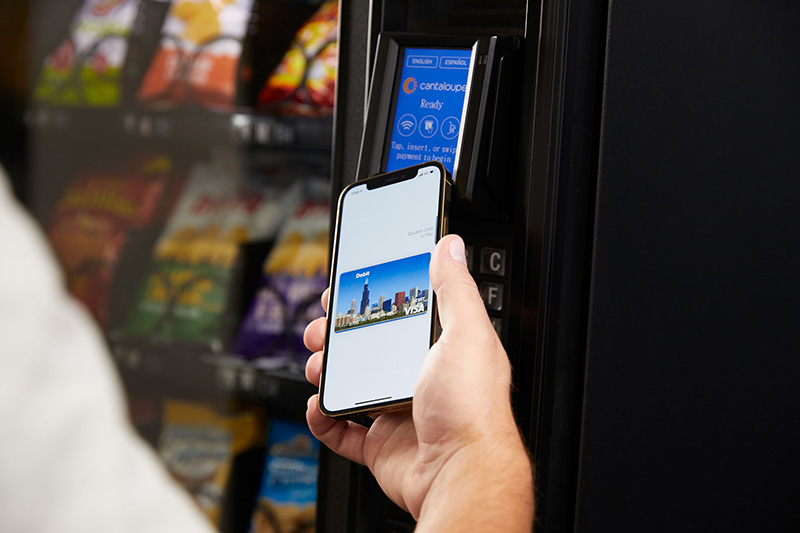
mobile pay to smart cooler
texas vending logo

Ready to Upgrade Your Break Room?

Texas Vending, your friendly neighborhood vending provider helps DFW warehouses and facilities add coffee, snacks, fresh food, smart coolers, and micro market service without extra work for your staff.

Get a local team, flexible setup, no contract, and fast support for your break room.
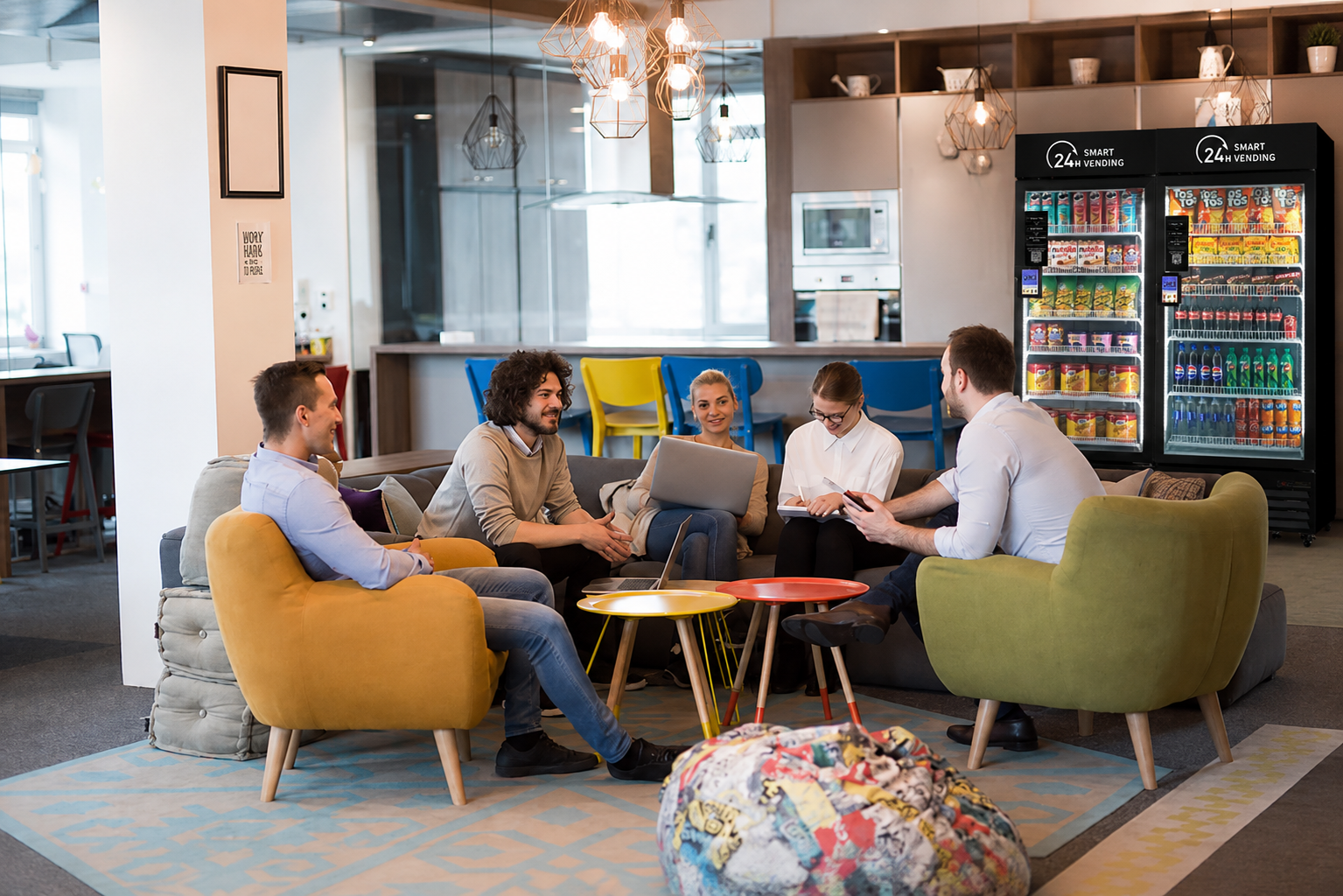
Employee Distribution and Shift Coverage Determine Where the Second Service Point Goes

Large workplaces rarely operate around one break room.

Warehouses stretch across hundreds of thousands of square feet. Manufacturing facilities separate production departments. Hospitals use secured floors and staff-only areas. Corporate campuses occupy several buildings. Distribution centers divide employees between shipping, receiving, offices, and production zones.

A single vending area at the front of the building does not serve those groups equally.

OSHA defines workplace eating areas within its sanitation standards and requires food-service operations and employee eating areas to follow appropriate sanitary conditions. Location planning therefore needs a proper employee area rather than placing equipment wherever unused floor space exists.

Texas Vending reviews walking paths, break-room locations, shift entrances, badge restrictions, time clocks, loading areas, and department populations before adding another unit.

If 180 employees work in a warehouse but 90 of them take breaks at the opposite end of the building, another vending service point near that group solves a distribution problem rather than an inventory problem.

Shift schedules create the same issue.

Headcount Does Not Tell You How Employees Move Through the Building

Multiple Service Types Cover Different Purchasing Needs

A second service point does not always mean another identical vending machine.

The existing setup may already handle packaged snacks and drinks effectively. The next problem could be meal access, coffee, or additional checkout capacity.

A smart cooler supports refrigerated sandwiches, salads, wraps, yogurt, breakfast products, protein boxes, cold coffee, and other fresh-food selections.

A micro market provides significantly more capacity through open shelving, refrigerated sections, freezers, and self-checkout. Texas DSHS describes self-service food markets as unattended retail food establishments using open racks, refrigerated equipment, freezers, and self-checkout kiosks. The agency also outlines temperature-control and servicing requirements for refrigerated foods.

For larger accounts, Cantaloupe’s Seed Markets ties individual market sections to inventory and route scheduling, allowing operators to service the areas that actually require replenishment.

That supports a mixed equipment strategy instead of duplicating the same machine throughout the facility.

Smart cooler vending placed near a DFW warehouse employee break area

A Micro Market Becomes the Better Expansion Once Demand Outgrows Individual Machines

There is a point where adding machine after machine stops being the strongest layout.

A workplace already operating several vending machines and a refrigerated cooler may have enough employee demand to support a centralized micro market.

Micro markets expand selling capacity beyond fixed vending spirals and columns. Employees select products from open shelving and refrigerated equipment and pay through self-checkout. Cantaloupe describes micro markets as unattended self-service retail spaces that combine food and drink selections with kiosk checkout.

Texas Vending looks at employee population, sales volume, meal demand, security, available space, operating hours, and shift activity before recommending that transition.

A micro market works best when the workplace has enough repeat purchasing activity to support the larger assortment and fresh-food inventory.

Fresh food changes the operating requirements.

Prepared sandwiches, salads, wraps, yogurt, and refrigerated meals require date control, proper temperatures, rotation, cleaning, and consistent restocking. Texas DSHS requires self-service food markets selling time-and-temperature-controlled products to use appropriate cold-holding protections and outlines route-driver responsibilities for checking dates, cleaning equipment, and replenishing inventory.

The market therefore needs sales volume strong enough to move refrigerated products before waste becomes excessive.

More Equipment Is Not Always the Best Answer

Expansion Should Solve a Measurable Problem

Texas Vending does not add equipment simply because a workplace has crossed a particular employee number.

The existing service data should show the reason.

Frequent stockouts point toward additional capacity. Long transaction lines point toward another payment point. Employees walking across a large facility point toward another service location. Strong refrigerated meal sales point toward another cooler. Growing product variety and sustained transaction volume point toward a micro market.

Connected smart-store systems also support expansion through multiple cabinets linked to a single point of sale. Cantaloupe’s current Smart Store platform supports scaling one setup to several connected units where additional capacity is required.

Texas Vending evaluates those conditions as part of ongoing account management.

Qualified North Texas workplaces receive equipment with $0 installation cost, No long-term contract, and a 24-hour response time for reported service issues. Texas Vending also handles equipment repair and relocation when employee traffic shifts or a break room moves.

A North Texas company that installs vending machine for free should not stop at installing the first machine. The provider needs to recognize when the location has outgrown it.

The right time to add a second vending machine, smart cooler, or micro market is when real sales and employee movement show that the existing setup no longer covers demand efficiently.

References

  1. Cantaloupe — Seed Pro Vending Management System
  2. Texas DSHS — Self-Service Food Market FAQs.
  3. Cantaloupe — Seed Markets.
  4. OSHA — 29 CFR 1910.141 Sanitation.
  5. Cantaloupe — Smart Stores

Transform Your Breakroom

Contact Us Now!

(614) 716 - 9068

Check out our blogs!