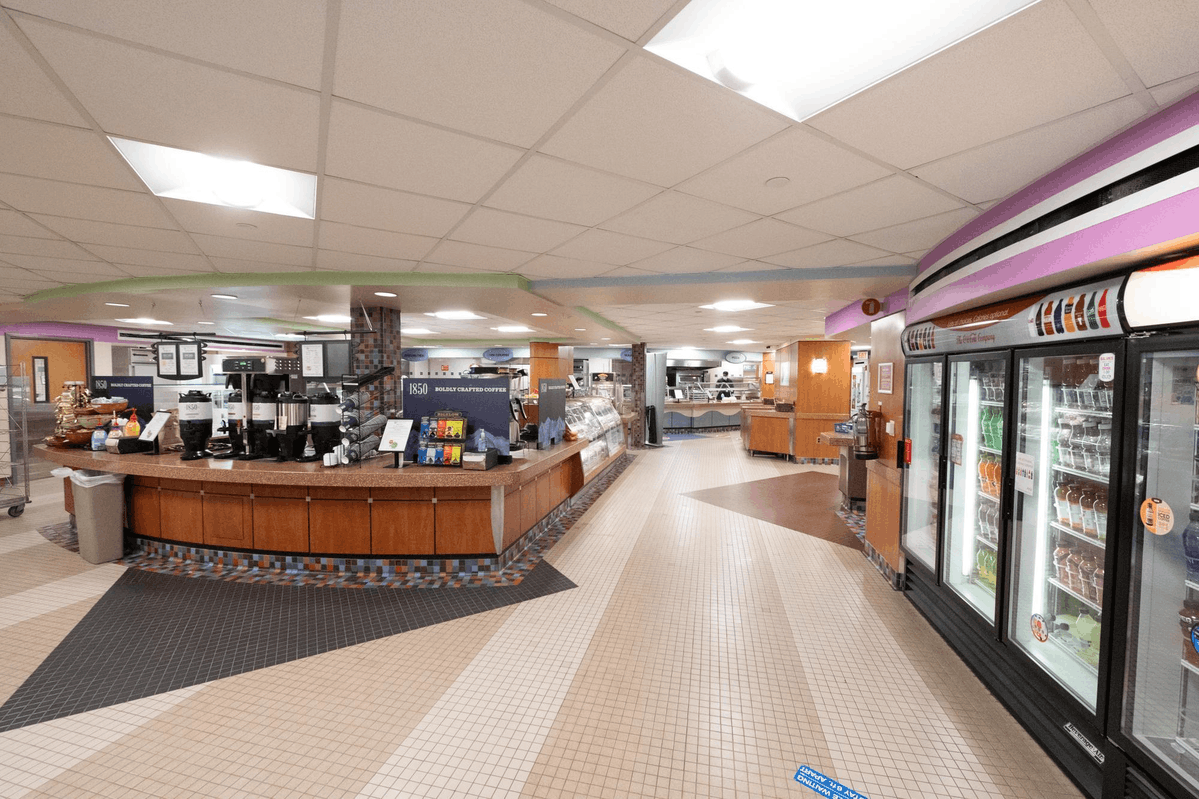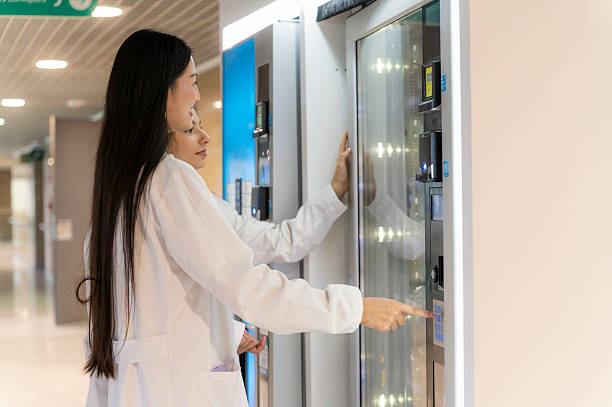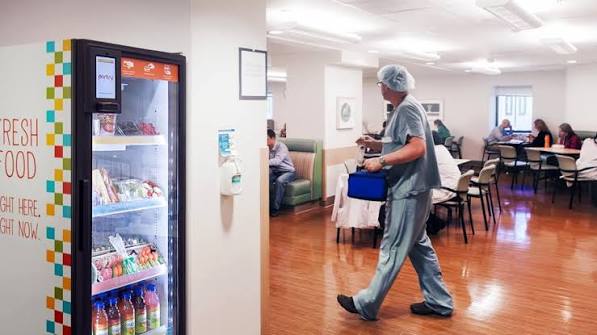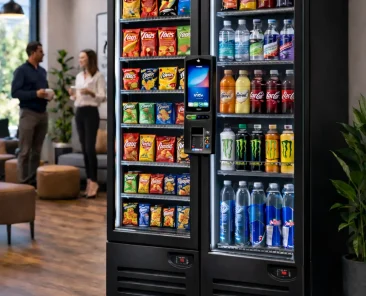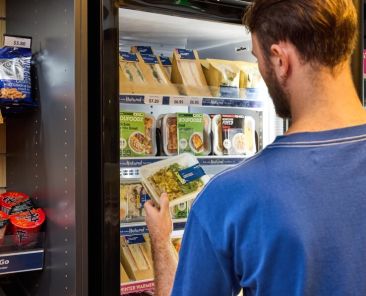

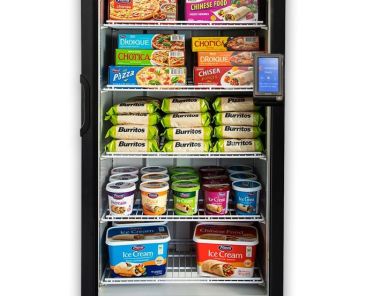
Learn how Irving hospitals can provide after-hours meals, drinks, and fresh food for nurses, technicians, and overnight staff with smart coolers.
Why Waiting-Room Traffic Does Not Automatically Qualify a Dallas Clinic for Smart Cooler Placement
Dallas has healthcare traffic at a scale that can look very attractive to a vending operator. Parkland Health alone operates a network of community health centers across Dallas County, while the Harry Hines medical corridor includes Parkland Memorial Hospital, UT Southwestern facilities, outpatient centers, specialty care, and related medical offices.
High traffic, however, is not the same as high purchasing demand.
A clinic reporting 150 or 200 patient visits per day does not automatically qualify for a smart cooler. Placement depends on how many people can actually reach the equipment, how long they remain onsite, employee population, hours of operation, existing food options, product turnover, and the cost of servicing the location.
Texas Vending evaluates those factors before recommending break room solutions because putting refrigerated equipment into the wrong location creates problems for both the clinic and the vending operator.
Dallas Clinic Traffic Has to Be Measured as Usable Traffic
A Person Entering the Building Is Not Automatically a Customer
Patient volume is only the beginning of a site evaluation.
Healthcare traffic behaves differently from traffic inside a warehouse, manufacturing plant, or corporate office.
Clinic visitors may arrive shortly before an appointment, check in, receive treatment, and leave. Some patients may have dietary restrictions connected to testing or procedures. Others may bring drinks with them or have little reason to purchase food during a short visit.
Employee traffic is usually more predictable.
Medical assistants, nurses, technicians, physicians, front-desk employees, billing teams, laboratory personnel, and administrative staff repeatedly use the same facility. Their work schedules create recurring opportunities for a workplace vending service.
This distinction becomes especially important in Dallas medical office buildings.
A building may report hundreds of daily visitors, yet those visitors may be distributed among ten separate practices on several floors. The proposed smart cooler could sit inside a staff-only break room accessible to only 45 employees.
The building traffic number may be 400.
The usable traffic around the equipment may be 45.
Those are two completely different placement opportunities.
Parkland’s own Dallas locations demonstrate how healthcare operating patterns can vary. Its Southeast Dallas Health Center has different service hours depending on the day and department, including later Tuesday building hours than on several other weekdays.
Operating hours affect the amount of time available to generate sales. A clinic open primarily during standard daytime hours has a narrower sales window than a hospital campus operating around the clock.
A proper refreshment solution therefore starts with accessible traffic by service area rather than the number of people who enter the property.
Ready to Upgrade Your Break Room?
Texas Vending helps DFW hospitals and medical centers add coffee, snacks, fresh food, smart coolers, and micro market service without extra work for your staff.
Get a local team, flexible setup, no contract, and fast support for your break room.
Fresh Food Sales Have to Support Refrigerated Inventory
Fresh Food Turnover Matters More Than a Full Waiting Room
A snack machine and a smart cooler do not have identical operating economics.
Packaged products generally provide a longer selling window. Refrigerated sandwiches, wraps, yogurt, salads, protein boxes, breakfast items, and other prepared foods require tighter inventory management.
That changes qualification.
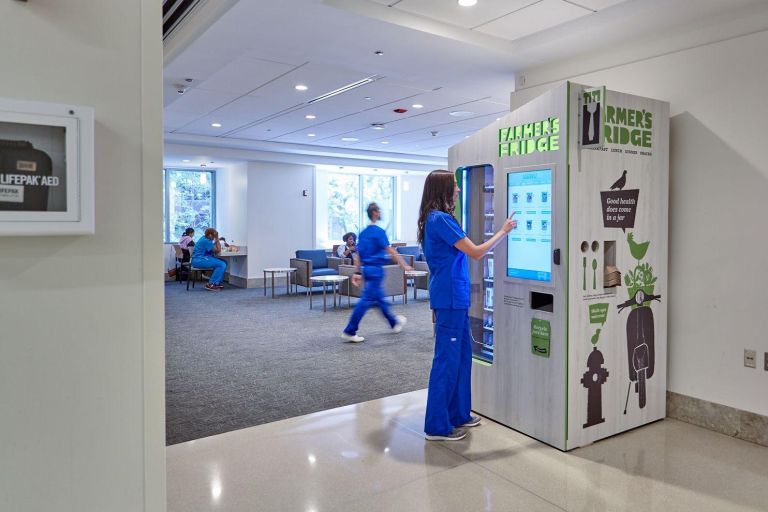
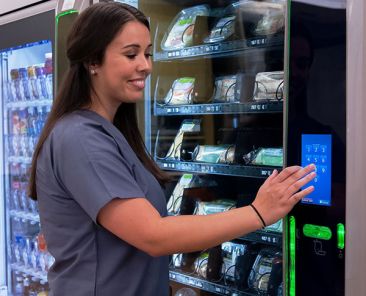
A smart cooler can support healthy vending machines fresh food selections, but those products have to move consistently.
Stocking too much creates spoilage and waste.
Stocking too little produces empty shelves and missed sales.
The operator has to find a usable inventory level between those two extremes.
Sales velocity is one of the most useful measurements. It shows how quickly individual products move during a defined period. That information can be combined with shelf capacity, service frequency, product expiration, and historical purchasing patterns.
Remote inventory technology improves the process.
An operated AI technology, micro-market service can track transactions and product movement, helping an operator identify fast sellers, slow sellers, stockout risks, and changes in demand. Similar inventory tools can support smart coolers and other connected self-service equipment.
Technology does not fix a weak location.
It helps measure whether the location is strong or weak.
A clinic with limited purchasing demand will not suddenly become profitable because inventory is being monitored remotely.
This is why Texas Vending may recommend traditional cashless vending, office coffee & tea service, or a smaller refreshment program instead of placing a full refrigerated solution immediately.
Equipment selection should follow demand.
If coffee consumption is strong but fresh-food purchases are limited, coffee service may deserve more space. If bottled drinks and packaged snacks dominate sales, traditional vending may be appropriate. If employee meal demand is consistent throughout the day, a smart cooler or micro market becomes much more attractive.
The strongest program can also combine services rather than forcing one format into every Dallas medical facility.
Access and Clinic Operations Can Change the Placement Decision
A vending operator has to service the equipment after installation.
That sounds obvious, yet it is one of the easiest details to overlook during qualification.
Public Access, Employee Access, and Vendor Access Are Different
Dallas healthcare facilities frequently contain controlled areas.
A clinic may have a public waiting room, employee break room, laboratory section, physician area, and back service entrance. A medical office building can add elevators, parking garages, property-management rules, and separate tenant suites.
The smart cooler location needs to work from three directions.
Customers need access to it.
Employees need enough time to use it.
The route driver needs permission to restock it.
Service access affects labor and route efficiency. A location requiring lengthy vendor check-in, restricted elevator access, distant parking, or tightly controlled delivery windows takes longer to service than an open employee break room with direct access.
Those costs become part of qualification.
The same applies to repair. Refrigeration, payment equipment, screens, connectivity, locking systems, and other components require service when problems occur. Texas Vending provides a 24-hour response time for reported service issues, but the provider still needs practical access to the equipment.
Power and connectivity also have to be reviewed. Smart retail equipment cannot simply be placed wherever an empty wall exists. Electrical requirements, ventilation, cellular communication, usable floor space, accessible paths, and door clearances should be checked before installation.
$0 Smart Cooler Placement Still Has to Be Economically Sustainable
Free placement can be misunderstood.
Texas Vending offers qualifying locations a $0 installation cost and no long-term contract. The clinic does not have to purchase the equipment simply to receive service.
That does not mean every location qualifies.
A North Texas company that installs vending machine for free still pays for the equipment, payment technology, warehouse inventory, delivery labor, vehicle expenses, maintenance, software, repairs, product loss, and ongoing account management.
Those costs have to be supported by purchasing activity.
Texas Vending generally looks for approximately 50 employees or comparable daily usable traffic as an initial qualification benchmark. It is a starting point rather than an automatic approval.
A Dallas clinic with 50 employees, extended operating hours, limited nearby food access, and consistent breakroom usage can be a stronger location than a clinic with far more patient visits but only 20 employees and short appointment cycles.
That is why qualification should examine employee count, usable visitor traffic, operating hours, access restrictions, food demand, existing amenities, equipment location, and service logistics together.
Dallas has everything from neighborhood health centers to massive medical campuses. Parkland’s system includes community-based health centers as well as its main hospital campus, while Medical City Dallas operates a large hospital on Forest Lane with 24-hour emergency services.
Those locations should not receive identical vending plans simply because they operate in healthcare.
A strong fresh food service starts with understanding how the property actually functions.
Traffic matters.
Usable traffic matters more.
References
- Parkland Health — Dallas County Locations
- Parkland Health — Southeast Dallas Health Center
- Medical City Dallas Hospital — Hospital Information
- Texas DSHS — Self-Service Food Market FAQs
- Texas DSHS — Retail Food Establishments Industry Guidelines & Resources
Check out our blogs!
See how a local vending company handles stocking, repairs, fresh food, coffee, and employee requests while reducing break room complaints and staff workload.

Learn how Dallas hospitals can provide meals, drinks, and fresh food for nurses, technicians, and staff with vending smart coolers.
Nemo enim ipsam voluptatem quia voluptas sit aspernatur aut odit aut fugit, sed quia consequuntur magni dolores eos qui ratione voluptatem sequi audantium totam…
Learn how Dallas hospitals can provide meals, drinks, and fresh food for nurses, technicians, and staff with vending smart coolers.
Learn how Irving hospitals can provide after-hours meals, drinks, and fresh food for nurses, technicians, and overnight staff with smart coolers.
Learn how Dallas offices, apartments, and commercial properties can qualify for free vending service with $0 installation, no long-term contract, and fast local support.