
Scroll Top

When Every Vending Bid Is Free, What Should a Dallas Hospital Compare?

Texas Vending is a $0-installation company, so this post does NOT argue against free installs. It argues that free is the industry standard – ours included – and that the real variable is what a vendor cuts to fund the zero.

Every vending proposal a Dallas medical facility receives arrives at the same number. Zero. No equipment cost, no delivery charge, nothing to pay at installation. Texas Vending quotes it that way too: for a qualifying location the equipment, delivery and install are free. We would not ask a hospital to pay for a break room fixture that generates its own revenue.

That is what makes these decisions hard. When every bid on the desk costs nothing, price has no work left to do. The comparison slides toward whichever vendor offers the largest commission percentage, and the far more consequential question, what this program will be like to live with, never gets asked. In a building that never closes, that question
is the entire decision.

texas vending logo

Ready to Upgrade Your Break Room?

Texas Vending helps DFW hospitals and medical centers add coffee, snacks, fresh food, smart coolers, and micro market service without extra work for your staff.

Get a local team, flexible setup, no contract, and fast support for your break room.
When Every Proposal Says Zero, Price Stops Being the Question

A no-cost vending installation is not charity and it is not a loss leader. Equipment, route labor, refrigeration service, payment processing and spoilage all cost the vendor real money, and that money comes back out of the margin on what sells in your break room. The model works, and most of the industry runs on it, ours included.

But it means something specific. Every vendor offering you zero funds that zero from the same place, and there are two ways to do it. The first is to run the account well: right products, full machines, working equipment, strong sales. The second is to spend less on you. Fewer service visits. Slower response. No site survey. Refunds pushed back onto your staff. Spoiled product credited only if somebody in your department argues for it. 

On paper those two vendors are indistinguishable. Both say zero.

Commission percentage does not settle it either, because commission is calculated on sales, and sales come from a machine that is stocked, cold, connected and working. A higher percentage of a case that sits empty from Sunday afternoon is a larger share of a smaller number. Facilities managers who have run these programs know this: complaint volume tells them long before the commission statement does.  The costs that actually accumulate are the ones nobody assigns a number to. Somebody on your payroll fields the complaint when the card reader declines. Somebody explains to the night charge nurse for the third week running that yes, it is still broken. None of it appears on any proposal, and all of it is paid in hours your staff could have spent elsewhere.

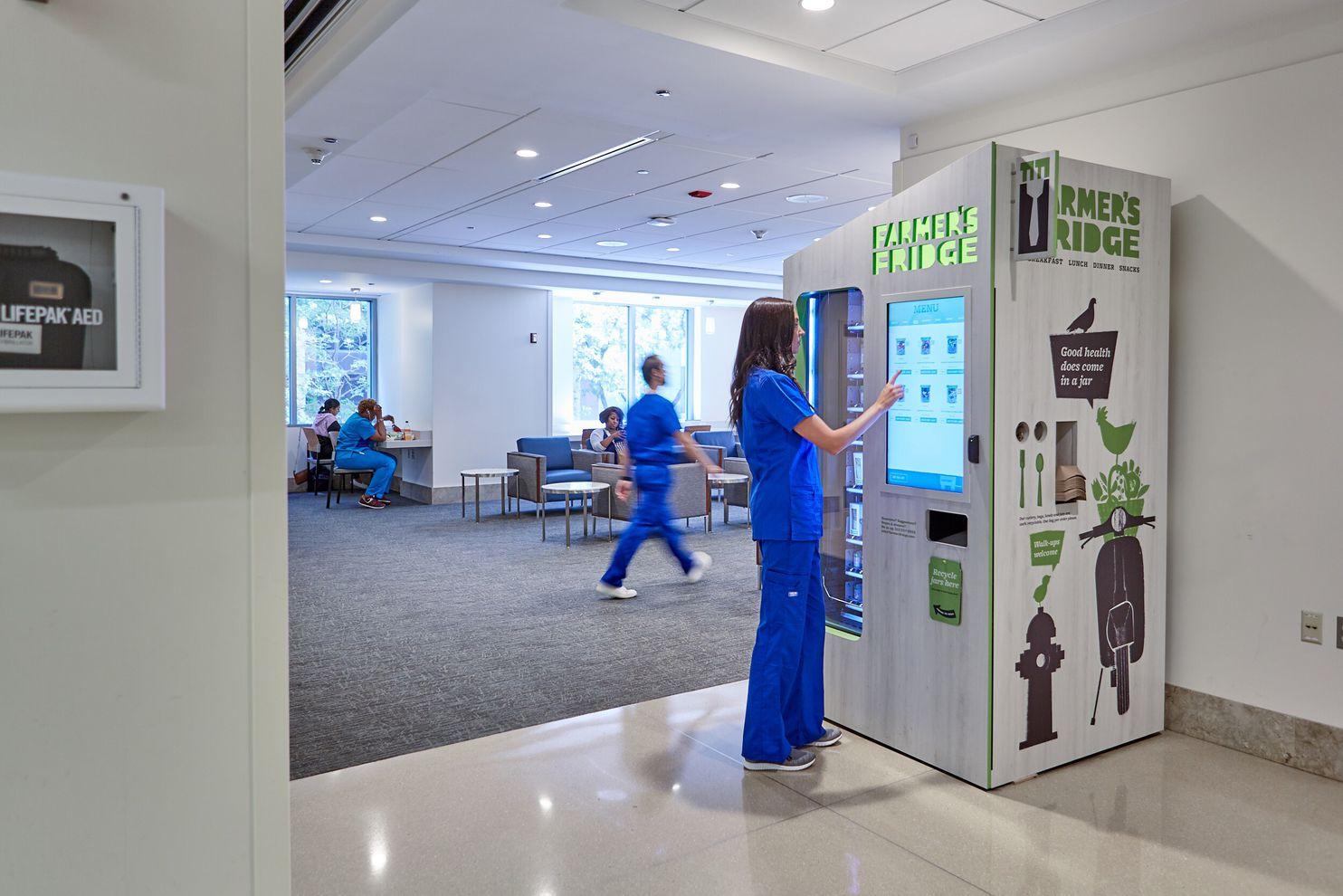
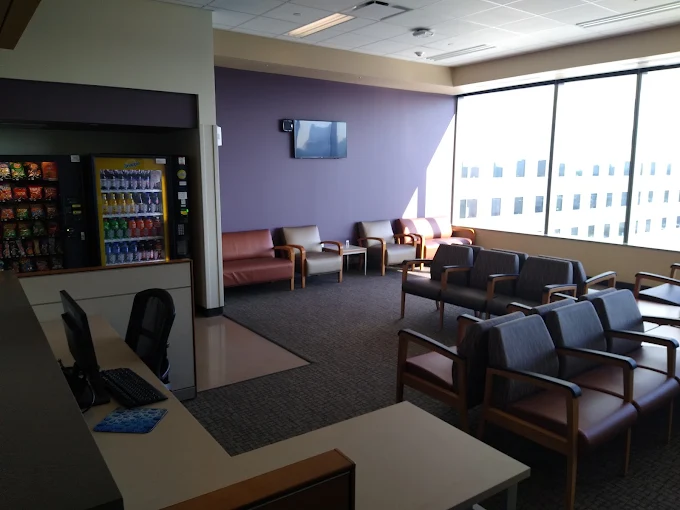
hospital vending at the waiting room

A Dead Machine at 3 A.M. Is Not an Inconvenience

In an office park, a broken vending machine is an annoyance discovered at lunch and forgotten by Tuesday. In a hospital it is something else, because the people it serves cannot leave. Free equipment is worth nothing at three in the morning if it is warm.

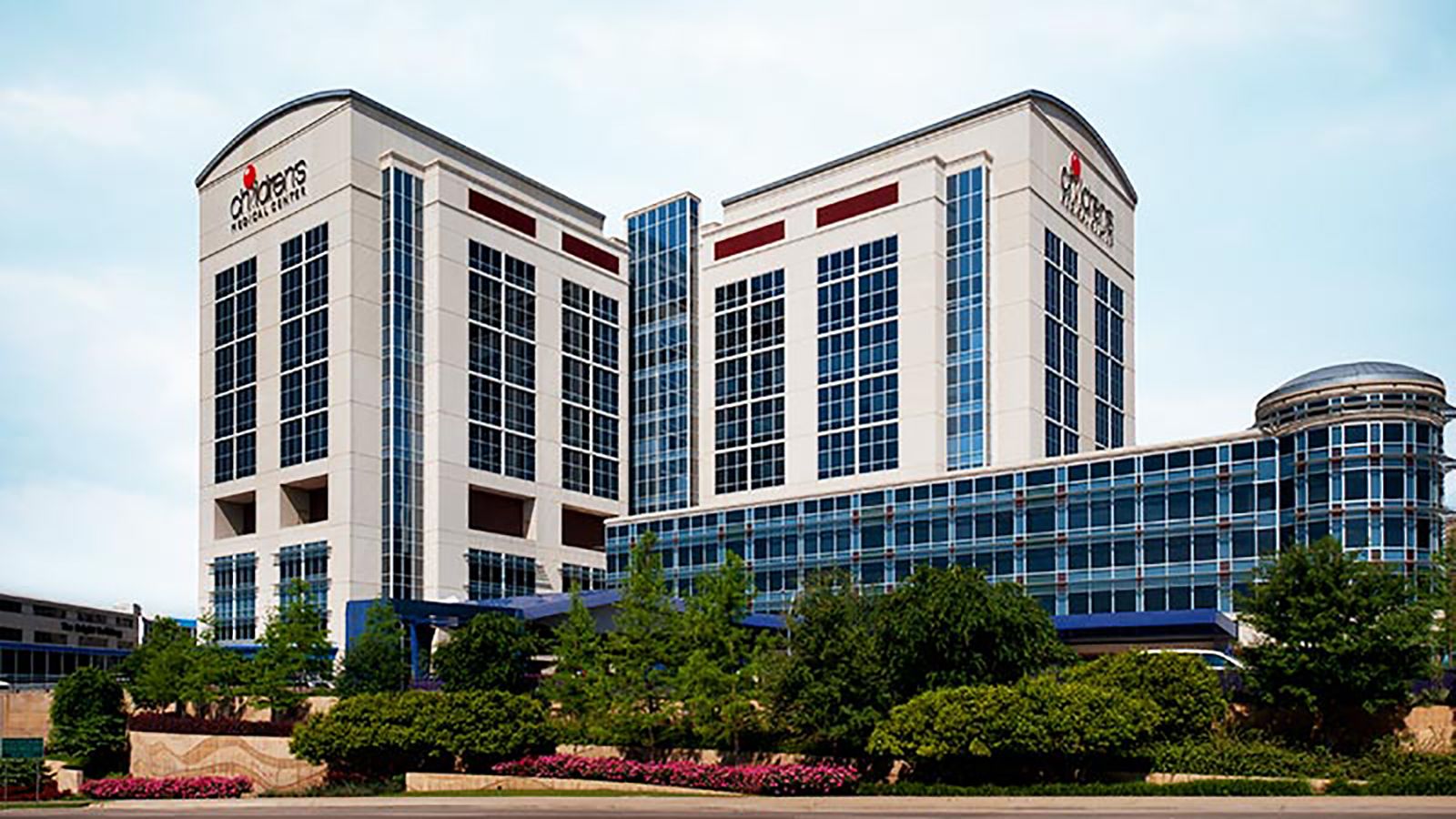
Dallas is a concentrated place to make this argument. The Southwestern Medical District covers roughly a thousand acres, employs more than thirty-five thousand people and handles close to three million patient visits a year. Parkland Memorial Hospital alone operates 862 beds across a campus exceeding three million square feet, with roughly 240,000 emergency visits annually. Add Baylor University Medical Center, Medical City Dallas, Methodist Dallas and UT Southwestern, and you have tens of thousands of clinical
staff on shifts that begin when the rest of the city is asleep.

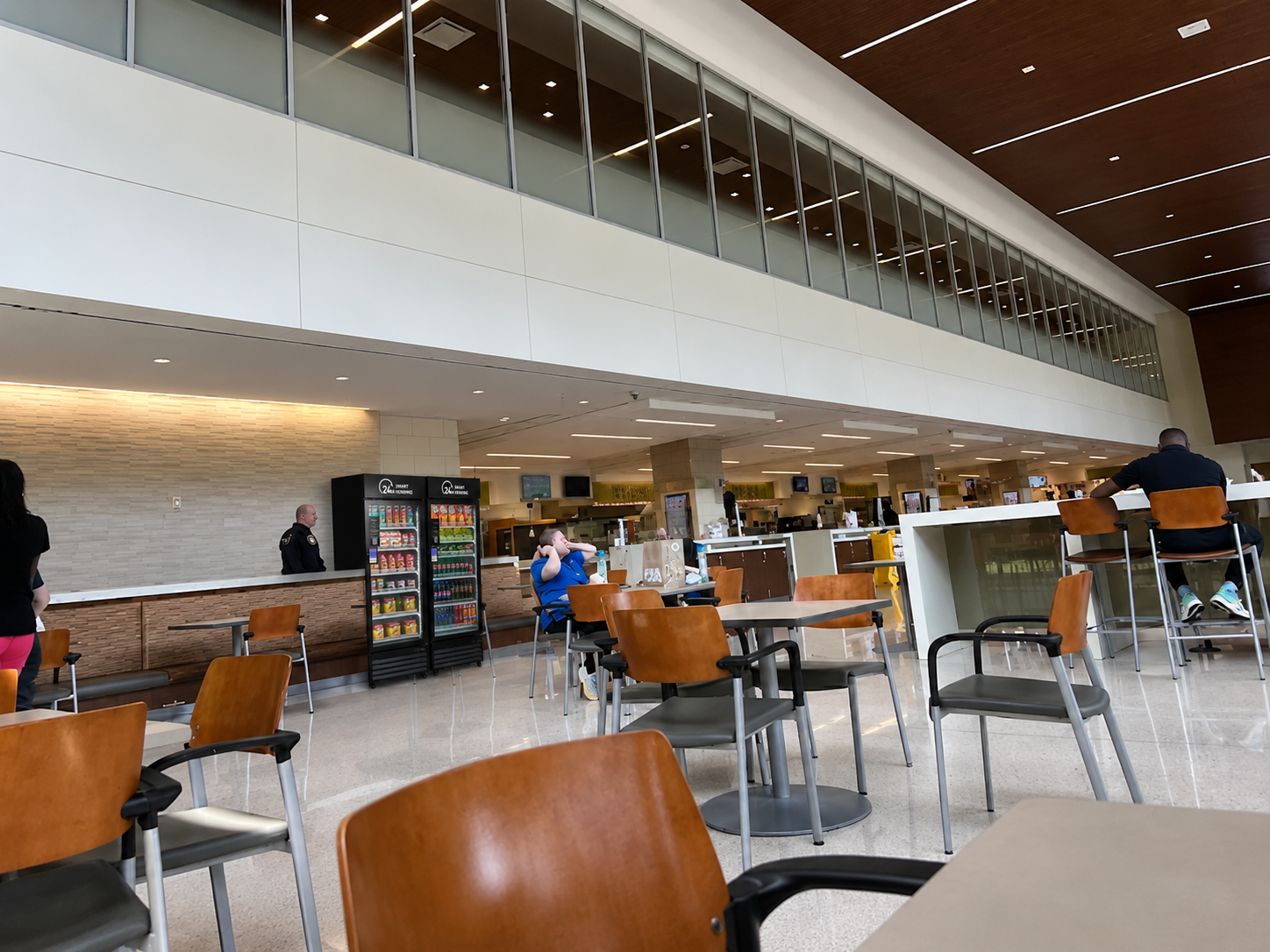
Those shifts share a constraint. Cafeteria hours rarely stretch across the overnight,clinical staff generally cannot leave the building on a break, and the restaurants nearest most Dallas medical campuses are closed by the time a night shift takes its first real pause. When the cooler goes down at three in the morning, the facility has quietly told a floor of nurses there is no food until the morning delivery, and the person who hears about it is not the vendor. It is your charge nurse, then your facilities office, then whoever answers the vendor’s line at eight.

This is why response tiers matter more in healthcare than almost anywhere else, and why they are the easiest thing for a thin service model to leave undefined. A vendor who treats a refrigeration failure and a coin jam as the same ticket has never lost a case of fresh food on a Friday night.

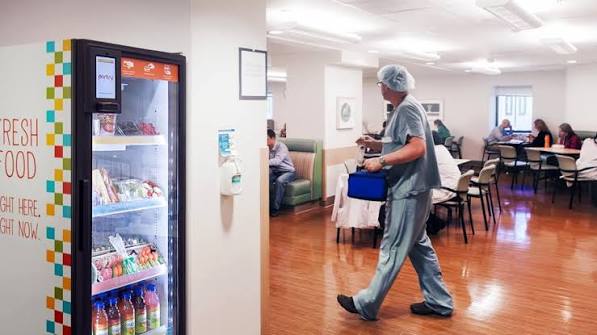
in scrub walking at the vending

What a No-Cost Install Should Still Include

Five things should come with a free installation and frequently do not. None are line items, which is why they never surface in a bid comparison, and each quietly moves a cost from the vendor to the facility.

The first is the site survey. Refrigerated equipment needs a dedicated circuit, machines have to clear doorways and elevators, and kiosks and card readers need a data path older hospital construction frequently does not provide. A vendor who quotes from an email is
not saving anyone money; they are deferring a problem to install day, with your engineering staff standing there waiting.

The second is the response commitment, written down. If the agreement does not distinguish a compressor failure from a card reader fault, you do not have a service level. You have an intention.

The third is refund administration. Somebody has to make employees whole when a machine takes money and returns nothing, and if the vendor does not own that process it defaults to your department.

The fourth is spoilage liability. Fresh food is the entire point of the program in a medical facility, and who pays when it does not sell, or when a cooler fails overnight, should be settled in writing before installation.

The fifth is the exit. Term length, notice period and exclusivity language decide whether a disappointing program is a twelve-month problem or a four-year one, and they are the clauses least likely to come up while everyone is admiring a free install.

Any of the top vending companies in Dallas Texas will install at no cost. Texas Vending does, and we would think less of an operator who did not. The distance between us shows up in the two years after the zero, in whether somebody answers at three in the morning.

If you are comparing proposals for a Dallas medical facility, ask every vendor to answer those five in writing before you compare a single commission percentage. Ours will be, and we will walk the building before we quote it. Call 614-716-9068 or email
hi@texasvending.com.

References

  1. Baylor Scott & White Medical Center–Irving, hospital and emergency-care information.
  2. Medical City Las Colinas Hospital, hospital and emergency-care information.
  3. CDC/NIOSH, Training for Nurses on Shift Work and Long Work Hours.
  4. CDC/NIOSH, Diet Suggestions for Night-Shift Nurses.
  5. U.S. Food and Drug Administration, 2022 Food Code.

Transform Your Breakroom

Contact Us Now!

(614) 716 - 9068

Check out our blogs!