
Scroll Top

Why Companies Are Switching to Local Vending
Providers for Better Service and Faster Response Times

Large national vending companies can offer scale, purchasing power, and established systems. While those advantages matter the problems usually begin when a workplace needs something outside the standard route schedule.

A popular drink sells out repeatedly, a card reader stops working, refrigeration needs attention, employees keep asking for a different product mix, a department adds a second shift, the break room moves during a renovation, the account manager knows about the issue, but the route team has not received the update yet.

That gap between reporting a problem and actually fixing it is one reason companies across North Texas are taking a closer look at local vending providers.

The decision is not necessarily about choosing a smaller company over a larger one. It is about how quickly the provider can turn information into action.

A good workplace vending service should manage stocking, equipment, fresh food, coffee, payment technology, repairs, product changes, and service scheduling without requiring the customer to repeatedly follow up. For facility managers, office managers, HR teams, and property managers, response time can matter just as much as product pricing.

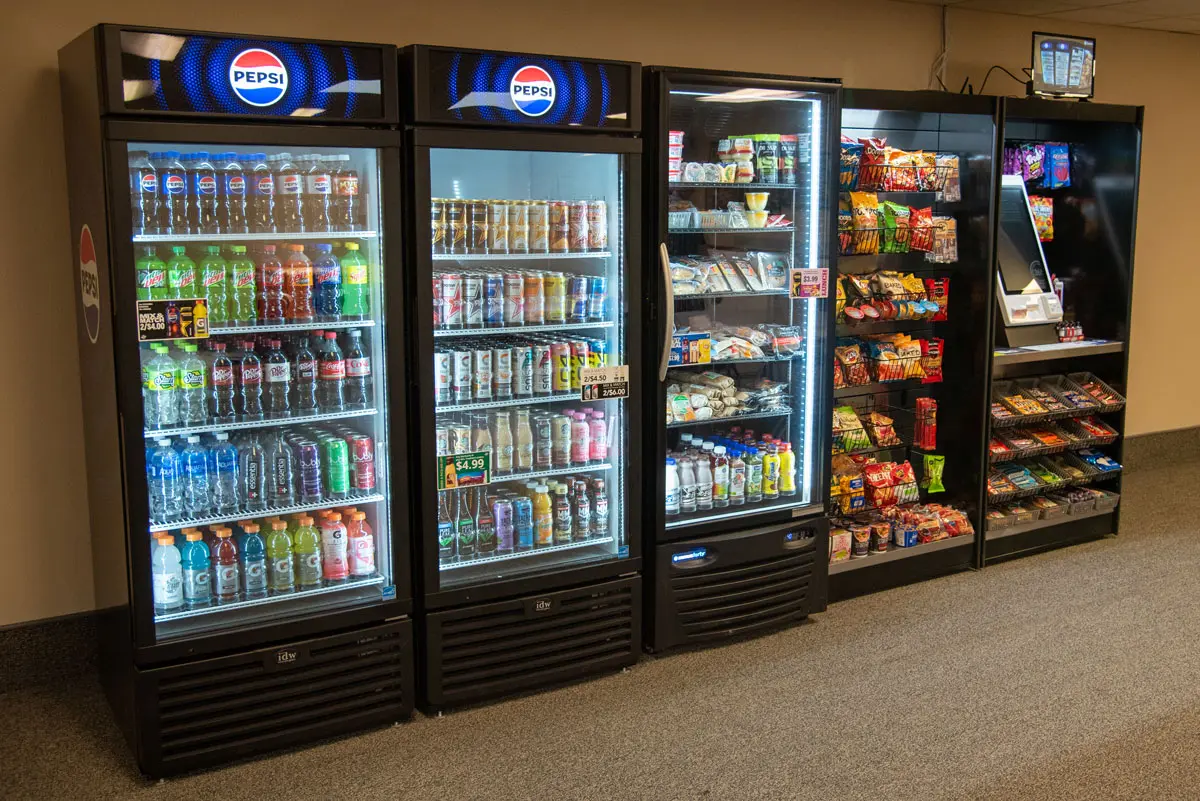
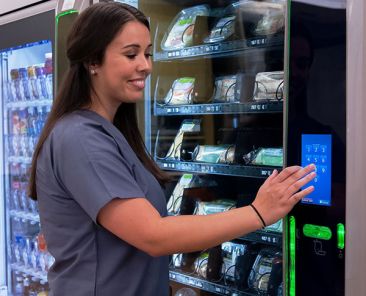
breakroom in DFW office
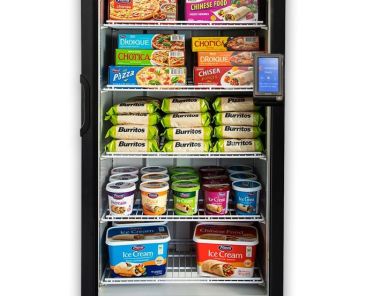
smart fridge office vending Texas Vending

Local Decision-Making Can Shorten the Distance Between a Problem and Its Solution

Vending service involves a chain of people and systems. Route drivers replenish products. Warehouse employees prepare inventory. Technicians repair equipment. Account managers communicate with customers. Operations teams change schedules. Purchasing teams bring products into the warehouse.

The longer that chain becomes, the easier it is for a simple request to slow down.

A local provider usually operates within a smaller geographic service area. The account manager may work directly with the route supervisor, technician, and warehouse team serving that customer. That structure can reduce the number of handoffs required to make a change.

Consider product availability. Modern vending systems can provide remote sales and inventory information showing which selections are moving quickly. If bottled water repeatedly reaches low inventory before the next scheduled service, the provider has several options. It can increase the quantity loaded into the equipment, modify the product layout, change the route schedule, or add another service visit.

The technology identifies the issue. Local operations determine how quickly the issue is corrected.

The same applies to equipment repair.

Cashless vending machines, smart coolers, kiosks, and micro markets depend on refrigeration, payment hardware, connectivity, screens, controllers, locks, sensors, and other components. A failed payment terminal can turn a fully stocked machine into equipment employees cannot use.

Customers should know what happens after that problem is reported.

Texas Vending provides a 24-hour response time for reported service issues across its North Texas service area. Keeping technicians and route operations within the same market allows service problems to be handled without waiting for support to travel from another region.

Local control also matters when the workplace itself changes.

Warehouses add shifts. Offices increase headcount. Medical facilities move departments. Companies remodel employee areas. A machine that served 60 employees may suddenly be serving 120, while equipment located in a former traffic path may become nearly invisible after a renovation.

The vending program should be able to change with the facility rather than remain locked into the original installation plan.

Micromarket Texas Vending
texas vending logo

Ready to Upgrade Your Break Room?

Texas Vending, your friendly neighborhood vending provider helps DFW warehouses and facilities add coffee, snacks, fresh food, smart coolers, and micro market service without extra work for your staff.

Get a local team, flexible setup, no contract, and fast support for your break room.

Better Service Comes From Managing the Account, Not Just Filling the Machines

A vending provider can technically complete every scheduled delivery and still provide poor service.

The route driver arrives. Products are loaded. The visit is recorded. The truck leaves.

That does not necessarily mean the right products were stocked.

Good account management requires looking beyond whether a machine contains inventory.

Product velocity matters. Stockout frequency matters. Fresh-food waste matters. Shift schedules matter. Employee requests matter. Equipment uptime matters.

If an energy drink sells out every week while another selection barely moves, the assortment should change. If employees repeatedly request protein snacks or zero-sugar beverages, the provider should evaluate the sales potential rather than leaving the same product plan in place indefinitely.

Fresh food service requires even more active management.

Sandwiches, salads, wraps, yogurt, breakfast items, bowls, and other refrigerated products cannot remain in equipment indefinitely.  The operator has to balance availability against expiration and waste. Remote sales information helps, but someone still has to make decisions about ordering, service frequency, quantities, and product rotation.

The same principle applies to office coffee & tea service.

A workplace that runs out of cups every Thursday does not necessarily need a new coffee system. The weekly supply quantity may simply be wrong. If coffee consumption increases after a department expansion, the service plan should increase with it.

Local providers can also coordinate several break room solutions under the same operation. A larger workplace may have traditional vending, a smart cooler, an operated AI technology micro-market service, coffee equipment, water service, and pantry products.

Managing those services together can reduce the workload placed on the customer.

One provider handles inventory. One provider manages service schedules. One team handles equipment issues. Product requests go to the same organization. Repair and vending-machine moving can remain within the same service relationship when the facility changes.

That is especially important for facility teams already managing HVAC systems, janitorial vendors, security, construction projects, contractors, furniture, employee requests, and building maintenance.

The vending provider should remove work rather than create another category of work.

vending inventory physical review

Faster Response Has a Direct Effect on Employee Experience and Account Performance

Response time is sometimes treated as a customer-service metric. In vending, it is also an operating metric.

An empty selection cannot generate a sale.  A payment reader that is offline cannot process a transaction.  A refrigeration problem can put fresh inventory at risk.  A coffee brewer that is down during the morning rush affects an entire department.

A micro-market kiosk experiencing a payment issue can interrupt access to hundreds of products at once.

The longer those problems remain unresolved, the larger their effect becomes.

Local vending providers have an opportunity to compete on that point because their customers are geographically closer to the people responsible for solving the issue.

That does not mean every local company automatically provides strong service. Local ownership by itself does not guarantee good operations. Companies evaluating providers should still ask practical questions.

Who receives service requests? Who repairs the machines? Where is the warehouse located? How is inventory monitored? What happens after a refrigeration alert? How quickly are payment problems addressed? Can equipment be moved if the break room changes? How frequently can the route schedule be adjusted?

The quality of the answers matters more than the size of the logo on the vending machine.


Texas Vending serves North Texas workplaces with traditional cashless vending, smart coolers, micro markets, fresh food service, office coffee & tea service, equipment repair, and vending-machine moving. Qualified locations may receive equipment with $0 installation cost and no long-term contract.

Companies searching for a North Texas company that installs vending machine for free should still look beyond the installation offer. Equipment placement is one day. Service continues for years.

A strong local vending relationship should become less noticeable over time because fewer problems reach the customer’s desk.

Inventory gets adjusted before repeated stockouts become normal. Product requests reach the people who control purchasing. Equipment issues go directly to local service personnel. Fresh food quantities change according to actual demand. Coffee supplies follow consumption. Machines can be moved when employee traffic shifts.

Companies are not switching providers simply because they want a local name on the equipment.

They are looking for shorter communication lines, faster decisions, stronger accountability, and a service team close enough to act when something changes.

That is where a local vending provider can earn its advantage.

References

  1. Cantaloupe — Telemetry for Remote Vending Monitoring
  2. Cantaloupe — Seed Pro Vending Management System
  3. Cantaloupe — Seed Markets
  4. Texas DSHS — Self-Service Food Market FAQs
  5. OSHA — Sanitation Standard, 29 CFR 1910.141

Transform Your Breakroom

Contact Us Now!

(614) 716 - 9068

Check out our blogs!