education · compliance · vending
Smart Snacks Rules for Texas School Vending
By Maica Ibarra5 min read
Short answer: Vending machines in Texas K-12 schools that run the federal school meal programs must follow USDA’s Smart Snacks in School standards during the school day. In short: snacks up to 200 calories and 200 mg of sodium, entrées up to 350 calories and 480 mg of sodium, no more than 35% of calories from fat, under 10% from saturated fat, and no more than 35% sugar by weight. Drinks are limited by type and size for each grade level.
School administrators, child nutrition directors, and booster clubs all touch vending, and the rules can feel scattered. This guide puts the federal standards and the key Texas policy in one place. It is general information. Your district’s wellness policy can be stricter.
Who Do Smart Snacks Rules Apply To?
Smart Snacks cover competitive foods: food and drinks sold to students on campus during the school day outside the reimbursable school meal. That includes vending machines, school stores, snack bars, and a la carte lines.
The school day runs from midnight before to 30 minutes after the end of the official school day. A machine selling after that window, for example at an evening game, is outside the rule.
Smart Snacks do not cover colleges and universities, and generally do not cover machines in staff-only areas that students cannot use.
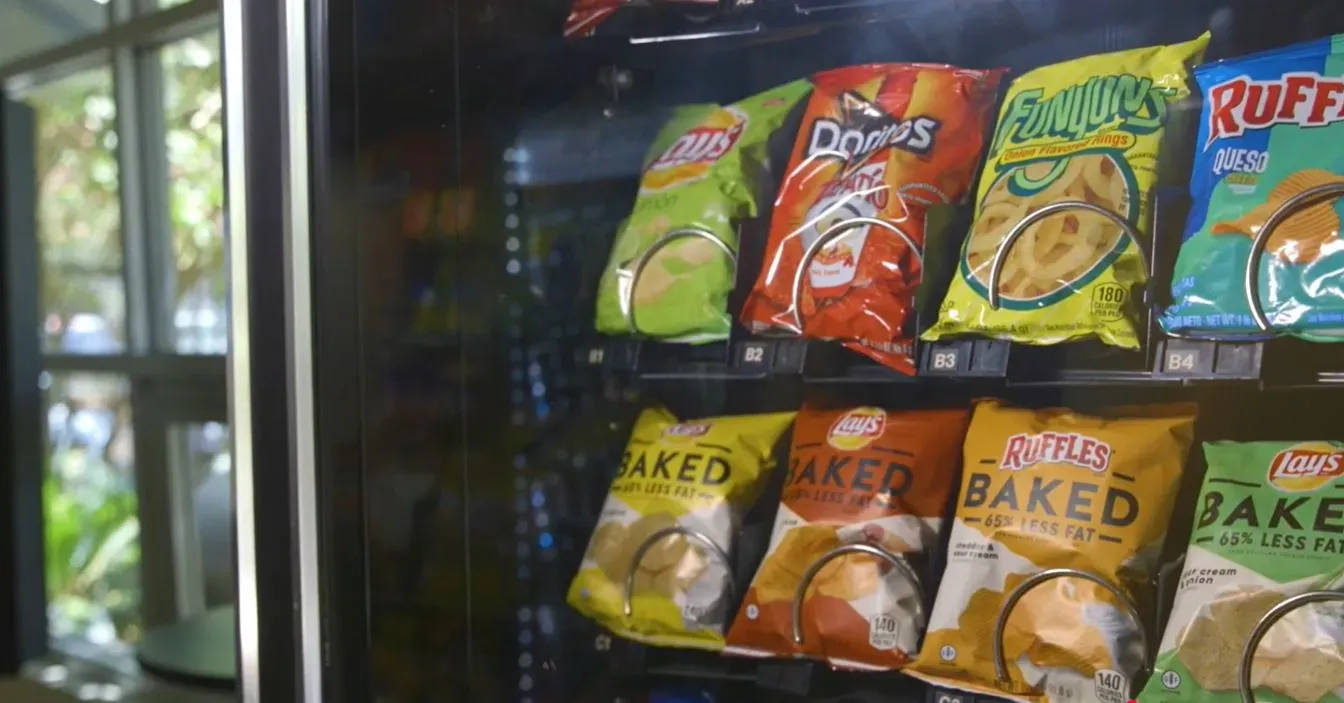
What Must a Smart Snack Be?
To be sold, a food must meet one of these general standards:
- A grain product with 50% or more whole grains by weight, or whole grain as the first ingredient
- A first ingredient that is a fruit, vegetable, dairy, or protein food
- A combination food with at least 1/4 cup of fruit and/or vegetable
What Are the Nutrient Limits?
It must also meet all of these limits:
| Standard | Snack or side | Entrée |
|---|---|---|
| Calories | 200 or less | 350 or less |
| Sodium | 200 mg or less | 480 mg or less |
| Total fat | No more than 35% of calories | No more than 35% of calories |
| Saturated fat | Under 10% of calories | Under 10% of calories |
| Total sugars | No more than 35% by weight | No more than 35% by weight |
Limits apply per item as packaged or served, including any added sauce or topping. The rule lists some exemptions to the fat and sugar limits, such as certain nuts, seeds, and dried fruit.
What Drinks Can a School Vending Machine Sell?
| Drink | Elementary | Middle | High school |
|---|---|---|---|
| Plain water, plain carbonated water | Any size | Any size | Any size |
| Milk or milk substitutes | Up to 8 oz | Up to 12 oz | Up to 12 oz |
| 100% juice, or juice diluted with water, no added sweeteners | Up to 8 oz | Up to 12 oz | Up to 12 oz |
| Calorie-free flavored water | No | No | Up to 20 oz |
| Other drinks under 5 calories per 8 oz | No | No | Up to 20 oz |
| Other drinks with 40 calories or less per 8 oz | No | No | Up to 12 oz |
Food and drinks for elementary and middle school students must be caffeine-free, except for trace amounts that occur naturally. High schools may sell caffeinated items.
What Are Texas Fundraiser Exempt Days?
USDA lets each state set a policy for school fundraisers that sell food that does not meet the standards. Texas allows six exempt days per campus per school year. Even on those days, exempt food cannot be sold during meal service in areas where school meals are sold or eaten. Districts usually require exempt dates to be scheduled in advance through the child nutrition department.
How Do You Keep a School Machine Compliant?
- Agree on a product list with the child nutrition department before the machine is stocked.
- Check the label, not the brand. Many brands make a Smart Snacks version of a popular snack in a smaller portion.
- Separate student and staff areas. Staff lounges can offer different items if students cannot buy there.
- Review the list each semester, as products and portion sizes change.
Frequently Asked Questions
Do Smart Snacks rules apply to school vending machines?
Yes. Smart Snacks standards apply to all food and drinks sold to students on campus during the school day outside the school meal programs, including vending machines, school stores, snack bars, and a la carte lines.
What hours do Smart Snacks rules cover?
The school day, defined as the period from the midnight before to 30 minutes after the end of the official school day. Sales outside that window are not covered.
Can a high school vending machine sell diet soda?
Federal rules allow high schools to sell calorie-free and low-calorie drinks in limited sizes, and caffeine is allowed in high school. Districts can set stricter rules, so check your local wellness policy.
Do Smart Snacks rules apply to college campuses or staff areas?
Smart Snacks apply to food sold to students in schools that run the National School Lunch or School Breakfast Program. They do not apply to colleges, and machines in staff-only areas are generally outside the rule. Confirm with your district.
How many fundraiser exempt days does Texas allow?
Texas policy allows six exempt days per campus per school year, and exempt foods still cannot be sold during meal service where school meals are sold or eaten.
Food That Fits the Campus
Texas Vending serves schools, colleges, and training campuses across Dallas–Fort Worth with vending machines, AI smart coolers, and micro markets. See education vending services or book a free site visit. Paying without cash? Read how cashless vending machines work.
General information, not legal or nutrition advice. Confirm requirements with your district and the Texas Department of Agriculture.
Sources
- Code of Federal Regulations, 7 CFR § 210.11, Competitive food service and standards
- Texas Department of Agriculture, Smart Snacks One-Pager (SquareMeals.org)